Why Choose the IB Early Years Programme? Key Benefits for Students

December 9, 2025
Why Choose the IB Early Years Programme? Key Benefits for Students
Education is not just the process of transferring information from one person to another - it is the process of forming a curious, self-assured, and kind-hearted global citizen, starting from a tender age. At Hiranandani Upscale School (HUS), we think that each child should have the opportunity to grow in an environment that stimulates their innate curiosity and transforms them into attentive and lifelong learners. To be in line with this philosophy, we provide the IB Early Years Programme (IB EYP), which is aimed at giving children the power of wonder and learning.
As parents and guardians in Chennai consider different early education options for their little ones, it is quite reasonable to question: What is the uniqueness of the IB EYP? In this blog, we delve into the topic of EYP, the main philosophy that underpins the IB Early Years Programme, and the impressive advantages of the IB Programme for preschoolers.
Understanding IB Early Years: What Is EYP? So, what exactly is EYP?
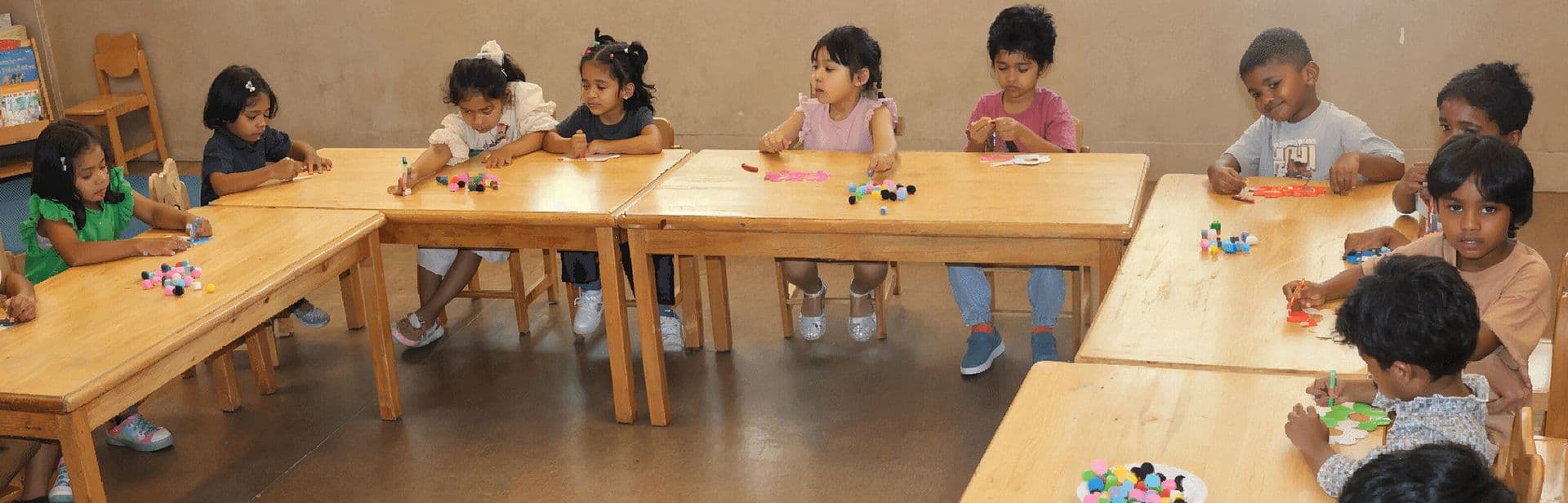
The IB Early Years Programme is the entry point for children, usually between the ages of 2.6 to 5.6 years, at HUS into the world of inquiry-based, child-centred learning under the globally recognised IB curriculum.
At its core, IB EYP is not just a preschool programme. It’s a carefully constructed framework that values play, exploration, relationships, and creativity as the means by which young children begin their educational journey. Rather than rote learning or rigid structure, the emphasis is on allowing each child to grow at their own pace, to inquire, to question, to create, and to learn how to learn.
Why the IB EYP Matters: Key Benefits for Students?
1. Holistic Development from the Very Beginning
Unlike traditional preschool programmes focused mainly on early literacy or numeracy, the IB Early Years Programme prioritizes the development of the “whole child.” That means cognitive growth, emotional awareness, creativity, physical coordination, and social skills.
Children learn language and communication through stories, songs, and meaningful interactions. Early mathematics emerges through play-based exploration of numbers, patterns, shapes, and spatial thinking. Creative arts, physical activities, drama, and free play contribute to fine and gross motor skills, imagination, and self-expression.
2. Inquiry-Led, Child-Centred Learning Anchored in Curiosity
The IB Early Years Programme is based on a philosophy of inquiry: children are not only allowed to ask questions but also required to do so. They should be active, not just recipients of information. Thus, through the use of inquiry, everybody's learning process becomes relevant, significant, and attractive. Over time, play has become the most important method of teaching; it has completely integrated the educational process. While different forms of play are ways of learning, such as those in nature, children are always involved in their learning path through such activities as exploring, pretending, and creating through movement, art, and all other means available.
3. Social-Emotional Growth & Empathy - as Important as Academics
In addition to cognitive skills, IB EYP places deep emphasis on social-emotional learning: empathy, cooperation, self-regulation, resilience, and respect.
Young children learn to express themselves, to work with peers, and to understand others’ feelings, foundational qualities for future collaborative learning, relationships, and citizenship. This nurturing approach fosters not just smart learners, but kind, responsible, socially-aware individuals.
4. Creativity, Imagination, and Expression
Under IB Early Years, creativity is not confined to extracurriculars - it permeates daily learning. Through art, music, movement, drama, role-play, and storytelling, children are offered rich opportunities to express themselves and explore their creativity. Such expression does more than entertain: it instills confidence, builds communication skills, encourages original thinking, and helps children shape their identities, all vital for personal growth and lifelong learning.
5. Smooth Transition to IB Primary Years and Beyond
The IB EYP is a part of the larger IB Primary Years Programme (PYP), which in turn is a part of the internationally acclaimed IB education continuum; thus, children receive continuity, consistency, and a smooth academic progression from early childhood through primary years and beyond.
The alignment of IB EYP with the larger curriculum not only provides the children with the opportunity to learn through play, acquire skills, and have the right approach to learning, but also makes their transition from one school year to the next comfortable, enabling them to develop academically and mature socially.
6. Early Confidence, Sense of Agency, and a Love for Learning
Kids are encouraged to have their own ideas and opinions and to take initiative as and when needed. Through this, they get to experience being active participants in their learning journey. It is very important to give kids a sense of ownership over their learning: they will then be able to extract the most from their curiosities, ideas, and efforts. They not only build but also gradually attain the ability of self-reliance and the quality of lifelong inquiry, which are the critical traits for their future success both academically and personally.
The IB EYP at HUS Chennai — A Thoughtful, Child-Centred Beginning
If you are one of the families residing in Chennai looking for early childhood education of international quality, then HUS's IB Early Years Programme should definitely be on your list, as it is a very caring and nurturing option having global alignment perspectives.
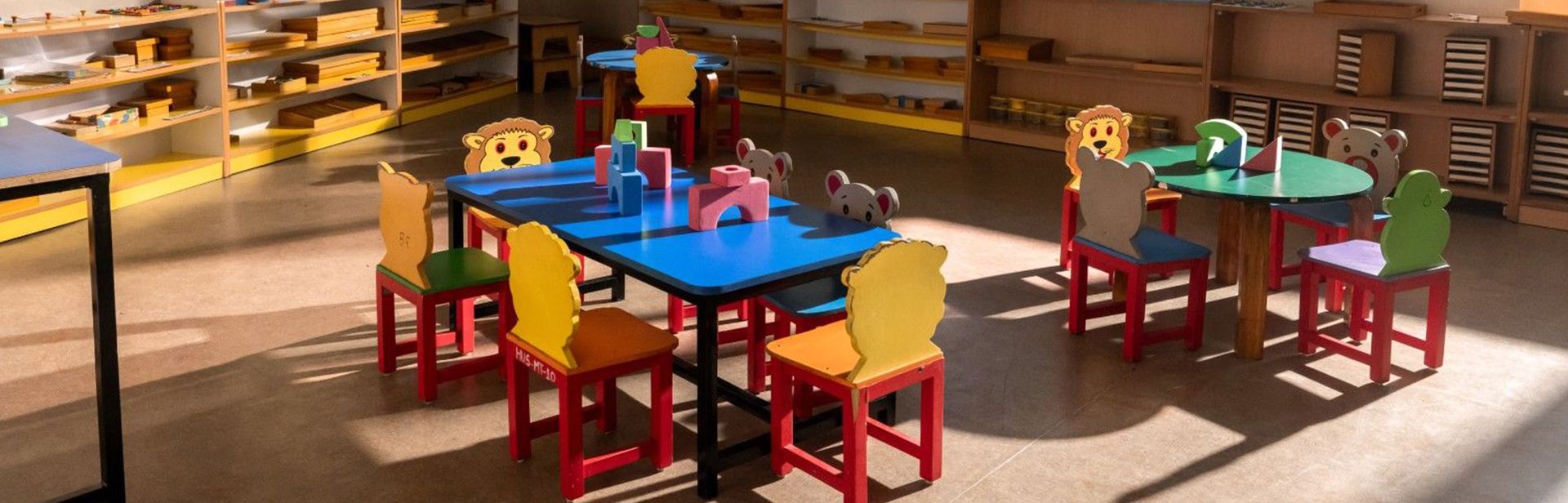
Children at HUS will not only be aware of EYP but also enjoy the full implementation of the IB Early Years Programme to the fullest through the inquiry-led, play-based early education approach.
The IB curriculum, based on the principles of the IB and designed for little learners, gives each child personal guidance, psychological support, and the chance to discover, test, and show their creativity. The advantages of the IB program show up not only in child readiness academically and cognitively at an early age but also in the emotional resilience, creativity, social empathy, and lifelong learning habits they acquire.
Conclusion
The selection of an appropriate early-learning programme is a very important decision for every parent or guardian. The IB Early Years Programme is not only a method of teaching for the kids A-b-C or 1-2-3, but it also includes the whole process of building up the child's personality, helping him/her to express himself/herself, develop empathy, and learn to be curious about the world for a lifetime.
For families in Chennai wanting an internationally-recognized, all-inclusive, and gentle curriculum that sees and accepts each child in terms of his/her language development, skills in artistic expression, personality-social-emotional growth, or first academics, IB EYP becomes a wise, inspiring option that has gone through deep thought.
At HUS, we are giving you a chance to travel with us on this adventure: witness your child's development not only in the academic area but also as a confident, kind, and curious person who is already in the world and ready to face its challenges.
FAQ's
EYP, or the IB Early Years Programme, focuses on inquiry-led, child-centred learning rather than rote academics. It nurtures cognitive, social, emotional, and creative development, helping children build a strong foundation for lifelong learning.
The IB EYP is designed for children typically between 2.6 to 5.6 years old, providing age-appropriate learning experiences that encourage curiosity, exploration, and social-emotional growth.
The IB Early Years Programme integrates academics with play, creativity, and emotional learning. It encourages children to inquire, express themselves, collaborate, and develop resilience and empathy alongside foundational skills.
Children gain a strong academic start, improved social-emotional skills, creativity, confidence, and a love for learning. IB EYP also ensures a smooth transition to the IB Primary Years Programme, providing continuity and global standards in education.
Parents can explore the IB Early Years Programme at Hiranandani Upscale School in Chennai by visiting HUS IB Early Years to understand the curriculum, facilities, and enrolment process.