A Comprehensive Guide to Choose IBDP Subjects

January 28, 2026
Table of contents
Introduction
For families in Chennai exploring a globally recognised and academically rigorous curriculum for Grades 11 and 12, choosing the right programme is crucial. Selecting suitable IBDP subjects plays a key role in this decision.
The IB Diploma Programme (IBDP) at Hiranandani Upscale School (HUS) blends academic depth with personal development. It helps students think critically, communicate clearly, and handle complex challenges with confidence. More than exam preparation, the programme focuses on holistic growth.
This guide explains the structure of the IB Diploma Programme, outlines the IBDP subject groups, and clarifies how subject choices work at HUS Chennai.
What Is the IB Diploma Programme (IBDP)?
The IB Diploma is a two-year course for learners aged 16-19, which is globally recognised by colleges and universities.
It develops critical thinking, intercultural understanding, and a sense of global citizenship among students. This prepares IB students for higher education and opportunities beyond India.
Learners will select six different subject groups to complete their IB diploma. They will complete the subjects that they wish to study at either the standard level (S.L.) or higher level (H.L.) based upon their future goals and interests.
In addition, students complete the IB core. This includes Theory of Knowledge (TOK), the Extended Essay (EE), and Creativity, Activity, Service (CAS). Together, these elements form the foundation of the IB diploma syllabus and encourage inquiry, research, and reflection.
Also Read: IB HL vs SL Subjects: How to Choose the Right Level for Your Goals
The Six IBDP Subject Groups at HUS
Understanding the IB diploma subject groups helps families see how the programme balances breadth and depth. At HUS Chennai, students select one subject from each group.
Group 1 – Studies in Language and Literature
This group develops reading, writing, and critical analysis skills. English is offered at SL and HL. These skills support success across all IB diploma subjects.
Group 2 – Language Acquisition
Learning a second language expands cultural understanding. HUS offers Spanish Ab Initio (SL), French Ab Initio (SL), Hindi (SL/HL), Tamil (SL), and ESL (SL). These options suit varied language backgrounds and academic goals.
Group 3 – Individuals and Societies
This group explores how societies function. Subjects at HUS include Business Management, Economics, Global Politics, Psychology, History, Digital Society, and ESS. Students analyse real-world systems and global issues.
Group 4 – Sciences
Science subjects encourage inquiry and experimentation. HUS offers Biology, Chemistry, Physics, ESS, Sports, Exercise and Health Science, and Computer Science at SL/HL. These subjects build scientific reasoning and problem-solving skills.
Group 5 – Mathematics
Mathematics develops logical and analytical thinking. Students can choose between Mathematics: Analysis and Approaches or Mathematics: Application and Interpretation, both at SL/HL. These choices align closely with university requirements.
Group 6 – Arts
The arts promote creativity and expression. HUS offers Visual Art at SL/HL. This group allows students to balance academic intensity with creative exploration.
Together, these groups ensure a well-rounded academic experience. This balance is a core strength of the IB diploma syllabus.
How do the IBDP Subjects Work Together?
IBDP subjects work alongside the core to form an integrated learning model. Together, they promote research, reflection, service, and ethical thinking. Students build strong communication, reasoning, and decision-making skills.
The Value of IB Diploma (IBDP) Subject Choices
Subject selection influences both university admissions and academic direction. Each subject strengthens critical thinking, adaptability, and intellectual independence.
At Hiranandani Upscale School Chennai, educators guide students to choose subjects that match both ability and interest. This balance prepares learners for a fast-changing global environment.
Also Read- Guide to Earning Your IB Diploma
A Seamless Transition to the IB Diploma Programme
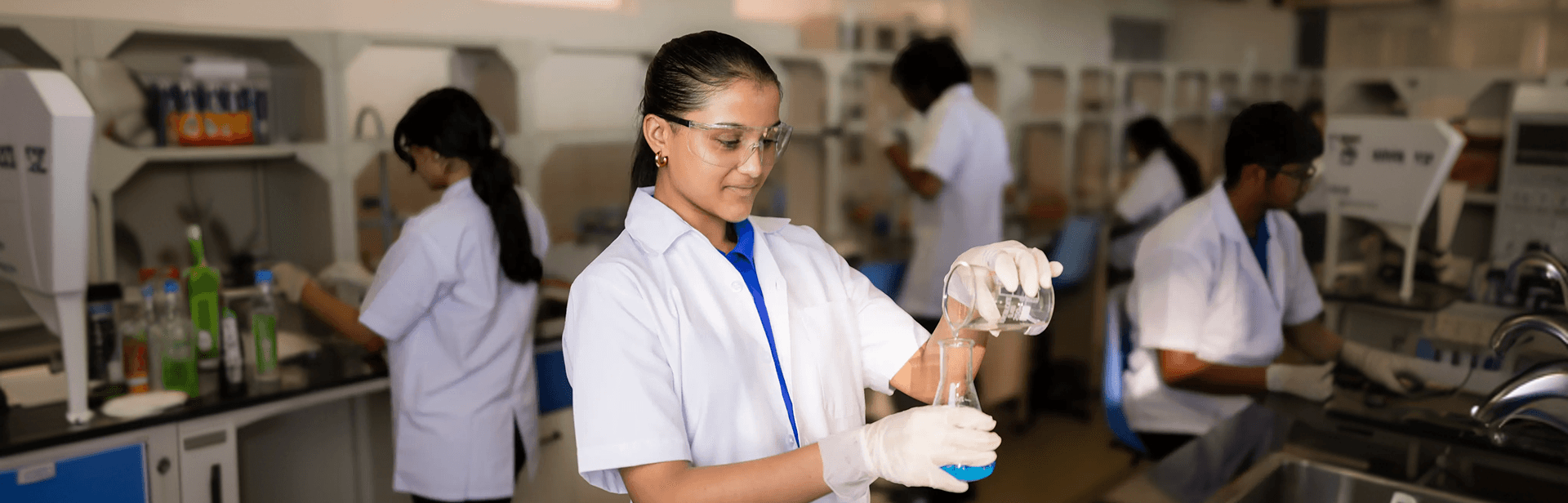
At Hiranandani Upscale School, the transition into the International Baccalaureate Diploma Programme (IB DP) is thoughtfully crafted to be smooth and supportive, even for students coming from different education boards. With a strong academic framework in place, students are guided at every step as they adapt to the IB way of learning.
Today, more families in and around Chennai are choosing an international education that also respects their culture and community. The IBDP at HUS reflects this balance beautifully. Through its subjects and learning approach, students develop curious minds, a strong sense of responsibility, and a deep awareness of the world around them.
Conclusion
For parents in Chennai seeking both academic excellence and personal growth for their children, the IB Diploma Programme offers a clear and meaningful pathway. It shows how each subject shapes a student’s future while preparing them for life beyond school.
At Hiranandani Upscale School, the IB Diploma is not just about academics. It is about nurturing curiosity, building confidence, and developing a global perspective that helps students step into the future with clarity and purpose.
FAQ's
Yes, if the student has access to the right academic and structural support systems, a student transferring from CBSE, ICSE, or any other board curricula will do well in the IB Diploma Program at HUS.
A student will study six subjects taken from one of the six IBDP subject categories, along with a combination of all three IB core components (TOK, Extended Essay, and CAS).
HL subjects are a more intense version of the same course as SL; hence, the core idea of HL is more complex than SL.
Universities assess the subject choices made by the student in conjunction with his or her academic qualifications to determine his or her level of readiness to pursue a specific field of study.
Yes. The IB Diploma Programme is recognized by universities in India and by universities outside India as well. This gives IBDP graduates the ability to apply for a university education in any part of the world.