What Makes the Role of Teachers Unique in an IB School?


January 29, 2026
Table of contents
When parents think about a school, they often look at the campus, the curriculum, and the results. But one factor quietly shapes everything your child experiences is the teacher.
The role of teacher in students life goes far beyond finishing a syllabus. A great teacher builds confidence, curiosity, and character.
In an IB school, this role becomes even more distinct. Because the IB is not designed for memorisation. It’s designed for meaningful learning.
Why IB Classrooms Need a Different Kind of Teacher
In many traditional classrooms, teaching can look like this: Explain → Write → Memorise → Test
In an IB classroom, learning is designed to be: Explore → Question → Connect → Apply → Reflect

The IB Primary Years Programme (PYP) encourages children to learn by exploring real-world topics across subjects, helping them understand concepts deeply through questions, activities, and hands-on experiences.
So naturally, the teacher’s role changes too. IB teachers don’t just teach content. They design experiences that help children think.
IB Teaching Methodology
IB teaching methodology is built on a few clear principles:
- Inquiry-led learning (students ask and explore questions)
- Concept-based understanding (learning the “why,” not just the “what”)
- Real-world connections (learning feels useful, not isolated)
- Ongoing assessment + reflection (not only exam-based evaluation)
The HUS PYP programme helps children grow skills like curiosity, clear communication, teamwork and more for everyday learning.
What Makes IB Teachers Unique?
Here’s the simplest way to understand it:
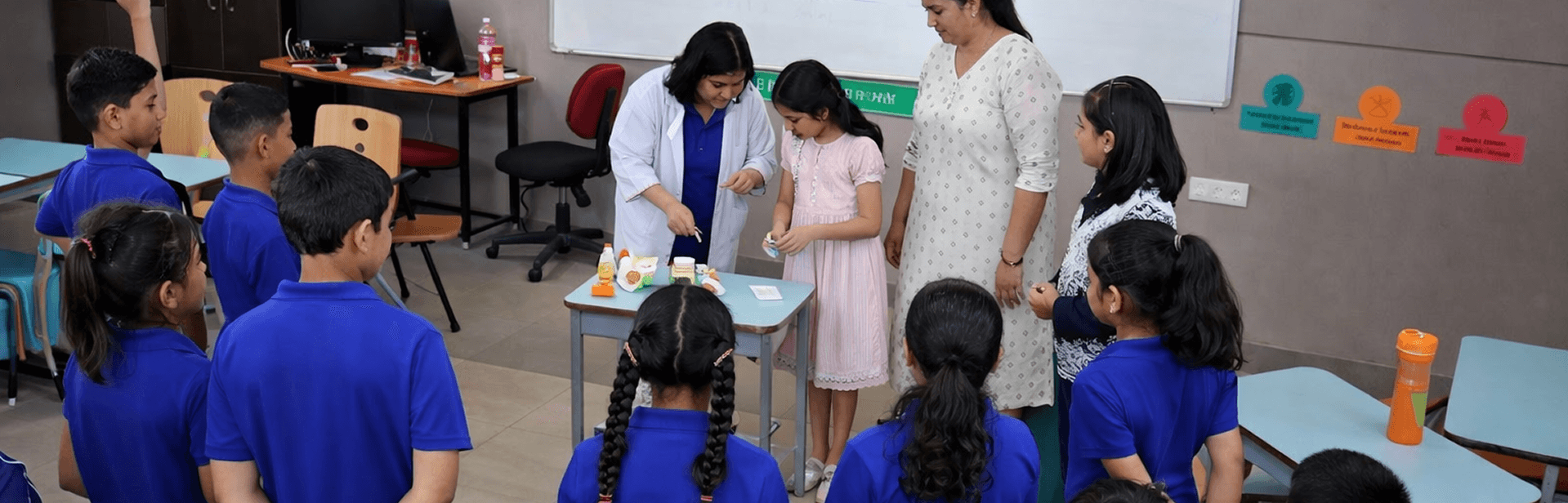
IB Teachers Are Not Just Instructors. They are facilitators of learning.
At HUS, teachers support students by guiding inquiry, encouraging reflection, and helping them become confident learners.
The IB Teacher’s Role
Teaching in an IB classroom looks fundamentally different from traditional instruction. The role of IB teachers in student life is not just to deliver lessons, they cultivate inquiry, foster global perspectives, and empower students to take ownership of their learning.
The comparison below highlights these key differences:
Traditional Teacher Role | IB Teacher Role |
Shares information | Builds understanding |
Teaches one subject at a time | Connects subjects through themes |
Focuses on right answers | Focuses on strong thinking |
Tests at the end | Assesses continuously |
Student follows the teacher | Student has voice + agency |
7 Roles IB Teachers Play Every Day
What does it truly mean to teach in an IB school? It means showing up each day ready to be much more than an instructor, here are seven roles that define the IB teaching experience.
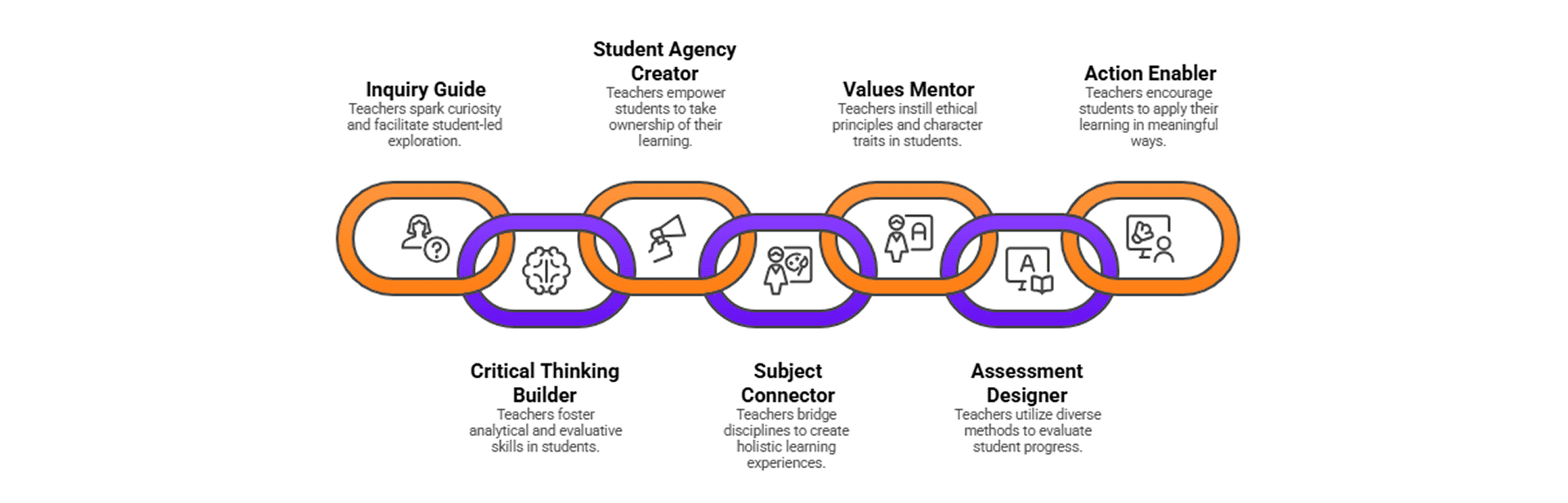
1) Inquiry Guide
IB teachers don’t start with “Today we will learn this” every time. They often start with a provocation, maybe with a question, story, object, or real-life situation.
Their job is to guide inquiry using:
- strong questioning
- listening and observing
- redirecting when needed
- timely feedback
2) Builder of Critical Thinking
In IB programme schools, teachers intentionally help students develop strong thinking skills by encouraging questioning, reflection, and problem-solving in everyday learning.
This includes:
- encouraging students to question information
- helping them evaluate ideas
- giving them safe space to explore mistakes
Teachers play a key role in building critical thinking by creating supportive environments and encouraging inquiry.
3) Creator of Student Agency
Student agency means students are active participants, not passive listeners. In the PYP programme, learners develop voice, choice, ownership, and action.
So the teacher:
- offers choices in learning tasks
- helps students plan and reflect
- supports independence gradually
This creates confident learners over time.
4) Connector Across Subjects
One of the most visible differences in IB is that learning doesn’t sit in boxes.
Let’s say the class is learning about saving water (this comes under “Sharing the Planet”.
- Science: Where does water come from? Why is it important?
- Maths: How much water do we use in a day? (counting / simple chart)
- Language: Write a few lines on “Why we should save water”
- Art: Make a poster to spread awareness
So the topic stays the same, but every subject helps children understand it in a different way. That’s how learning feels connected, not separate. The role of IB teachers is to connect the dots and make these links feel natural for children.
5) Mentor for Values + Character
IB schools aim to develop students through the IB Learner Profile.
These include being:
- Inquirers, Thinkers, Communicators
- Principled, Caring, Open-minded
- Balanced, Reflective (and more)
IB teachers bring these traits into daily classroom life through:
- discussions
- classroom norms
- reflection and responsibility
6) Designer of Assessment (Not Just Exams)
IB assessment is not only about marks.
In the PYP, assessment is ongoing and can include:
- portfolios
- presentations
- collaborative work
- reflections
So IB teachers spend a lot of time:
- observing learning
- giving feedback
- documenting progress
- supporting improvement
7) Enabler of Action
In the IB PYP, action is not extra activity, it's part of everyday learning.
According to IB research, educators have an obligation to support students' initiative, assist them in making informed decisions, facilitate it, and promote introspection.
Small, age-appropriate actions includes:
- making awareness posters.
- supporting a class project
- changing a personal habit
- supporting a cause in the community
When taken as a whole, these seven roles demonstrate that an IB teacher's influence on a student's life extends well beyond their role as a teacher. They mentor, push, and enable students to think critically, act purposefully, and develop into self-assured, compassionate people.
How Can Parents Experience this Difference?
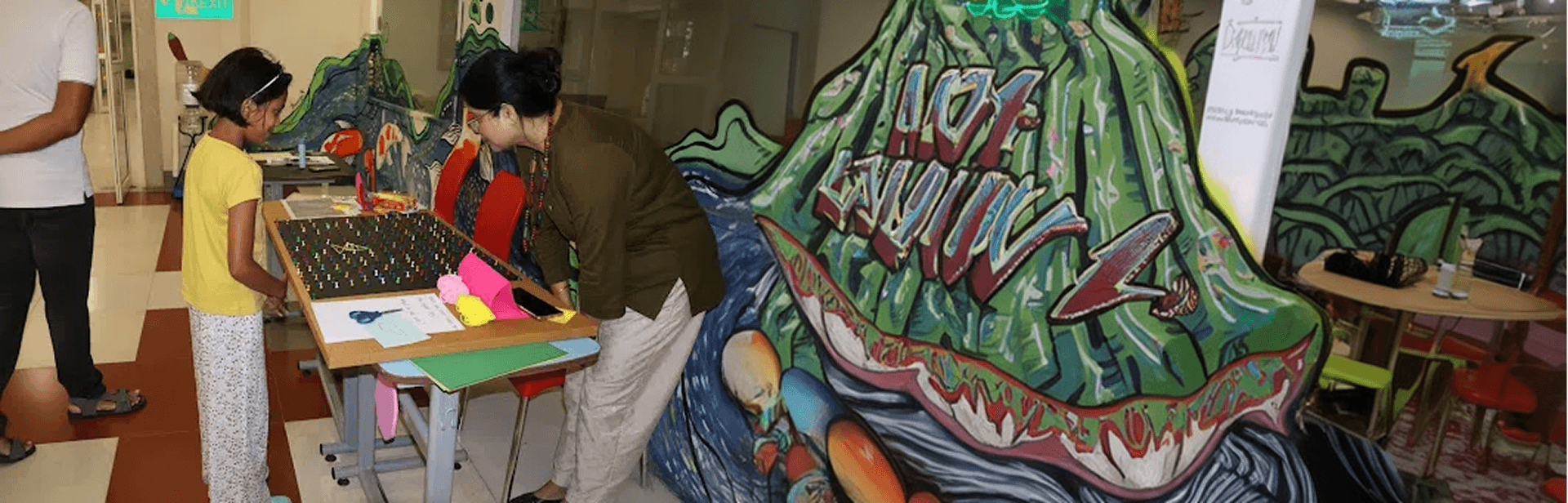
When your child is learning with strong IB teachers, you may notice:
- They ask more “why” questions
- They explain ideas in their own words
- They connect topics across subjects
- They become more independent
- They show more empathy in group work
This is exactly what many families look for when exploring ib schools in India.
Supporting the Teacher-Parent Partnership in IB
IB learning works best when it becomes a shared effort. Some schools describe learning as a community of learners where students, parents, and teachers support and empower each other.
Simple ways parents can support:
- Ask open-ended questions at home
- “What surprised you today?”
- “What are you curious about now?”
- Encourage reflection
- “What would you do differently next time?”
- Value progress, not perfection
Quick Checklist: What to Look for in Great IB Teachers
This checklist will guide you through what to look for in IB teachers before choosing an IB school for them.
| What to Observe | Why It Matters |
| Teacher encourages questions | Builds inquiry mindset |
| Student work shows thinking, not copying | Develops understanding |
| Feedback is frequent | Supports growth learning |
| Reflection is part of learning | Builds self-awareness |
| Students collaborate confidently | Builds ATL skills |
Conclusion
The role of teacher in students life becomes truly powerful in an IB school because the teacher is not just teaching chapters. They create learning environments where students inquire, connect ideas, and grow as independent thinkers. Every day, IB teachers shift between multiple roles to support both academic learning and holistic development in students.
They are shaping how a student:
- thinks
- questions
- collaborates
- reflects
- and takes meaningful action
That is what makes IB teachers unique. And that is why IB teaching methodology feels different, not louder, not harder but deeper.
FAQ's
IB teachers act as facilitators. They guide inquiry, reflection, and concept-based understanding instead of only delivering information.
No. Activities are used as learning tools. The goal is strong understanding, critical thinking, and real-world connection.
IB assessment is ongoing and integrated. It includes portfolios, presentations, tasks, and reflections not only tests.
Student agency means students have voice, choice, and ownership in learning. Teachers support students to become independent learners.