Student-Centred Learning: A Guide for Parents

November 11, 2026
Table of Contents
Student-centred learning puts the child, not the textbook or the lecture, at the heart of the classroom. Instead of waiting to be told what to know, students ask questions, make choices, and take responsibility for their own progress, while teachers guide, support, and challenge them. If you have ever wondered why your child's school talks about "inquiry", "voice and choice", or "learning by doing", this guide explains what it all means and how you can support it at home.
What Is Student-Centred Learning?
Student-centred learning is an approach to teaching in which learners are active participants in their education rather than passive recipients of information. Lessons are built around students' interests, questions, strengths, and needs. The goal is not just to cover content but to help children understand it deeply, apply it in new situations, and become confident, independent learners.
This approach is a core part of the IB Primary Years Programme (PYP), where students aged 6 to 11 explore big ideas through inquiry, research, and reflection.
How Does Student-Centred Learning Work in the Classroom?
In a student-centred classroom, learning typically follows a cycle of curiosity, exploration, and reflection:
- Spark curiosity. The teacher introduces a problem, question, or real-world scenario.
- Let students question. Children generate their own questions and decide what they want to find out.
- Explore and investigate. Students research, experiment, discuss, and collaborate with peers.
- Make sense of it. They organise findings, test ideas, and revise their thinking.
- Share and reflect. Students present what they have learned and think about how they learned it.
The teacher moves around the room, asking probing questions and offering support where needed, rather than delivering one lecture to everyone.
What Is the Difference Between Student-Centred and Teacher-Centred Learning?
In teacher-centred learning, the teacher is the main source of knowledge and students mostly listen, memorise, and repeat. In student-centred learning, the teacher designs the experience, but students do much of the thinking, questioning, and doing.
Teacher-centred learning | Student-centred learning | |
| Main voice in class | Teacher | Teacher and students together |
| Student role | Listener, note-taker | Questioner, researcher, collaborator |
| Teacher role | Source of information | Facilitator and guide |
| Pace and content | Same for everyone | Adapted to learners' needs and interests |
| Focus | Recall of facts | Understanding and application |
| Assessment | Mostly tests and exams | Ongoing, varied, with reflection |
Neither approach is wrong in every situation. Direct instruction still has a place, but student-centred learning builds the deeper skills children need beyond the classroom.
What Are the Benefits of Student-Centred Learning for Children?
When children have a real say in how they learn, the effects show up in how they think, feel, and behave:
- Higher engagement: lessons connect to students' own questions, so they pay attention for longer
- Deeper understanding: children learn why something is true, not just what to memorise
- Confidence and motivation: taking ownership of learning builds a sense of "I can"
- Stronger communication and teamwork: collaboration is part of everyday classroom life
- Lasting skills: curiosity, problem-solving, and resilience carry into later schooling and life
How Does Student-Centred Learning Encourage Independent Learning?
Independence grows when children are trusted with real decisions. In a student-centred classroom, students set goals, plan how to approach a task, manage their time, and check their own work. They learn to ask "What do I need to find out next?" before asking "What should I do?"
Teachers support this by gradually handing over responsibility. Over time, children move from needing step-by-step guidance to tackling problems on their own.
How Does Student-Centred Learning Develop Critical Thinking Skills?

Because students are asked to investigate rather than simply receive answers, they practise thinking critically every day. They compare sources, weigh evidence, consider other viewpoints, and explain their reasoning. Questions like "How do you know?" and "What might be another explanation?" become routine.
The habit of examining ideas instead of accepting them passively is one of the most valuable outcomes of this approach.
How Does Student-Centred Learning Support Different Learning Styles?
Every child learns differently. Some think best by talking, others by drawing, building, reading, or moving. Student-centred classrooms offer multiple ways to explore an idea and to show understanding, such as:
- Written reports, presentations, or discussions
- Models, experiments, and hands-on projects
- Visual organisers, drawings, and digital creations
- Group work as well as individual tasks
This flexibility lets each child learn through their strengths while still stretching into new ways of thinking.
What Role Does the Teacher Play in a Student-Centred Classroom?
The teacher's role changes from "sage on the stage" to "guide on the side", but it does not become smaller. Teachers plan the learning experiences, ask powerful questions, observe each child closely, give timely feedback, and step in when a student is stuck. They also create a classroom culture where it is safe to make mistakes and try again.
Small class sizes help this work well. At Hiranandani Upscale School (HUS) in Chennai, PYP classes are capped at 25 students, so teachers can support every child's inquiry individually.
How Do Students Participate in Their Own Learning?
Students take an active part in nearly every stage of learning. They may:
- Suggest questions they want to investigate
- Choose how to research a topic or present their findings
- Set personal learning goals and track their progress
- Give and receive feedback from classmates
- Reflect on what worked, what did not, and what to try next
- Take action based on what they have learned
How Are Students Assessed in a Student-Centred Learning Environment?
Assessment is ongoing and focuses on growth, not just final scores. Teachers use a mix of methods:
- Observations and anecdotal notes during everyday classroom work
- Portfolios that collect samples of a child's work over time
- Student reflections and self-assessment
- Peer feedback from classmates
- Summative tasks, such as a presentation, performance, written piece, or creative project, that show understanding at the end of a unit
No single test defines a child. Together, these methods give parents and teachers a fuller picture of what a student knows and can do.
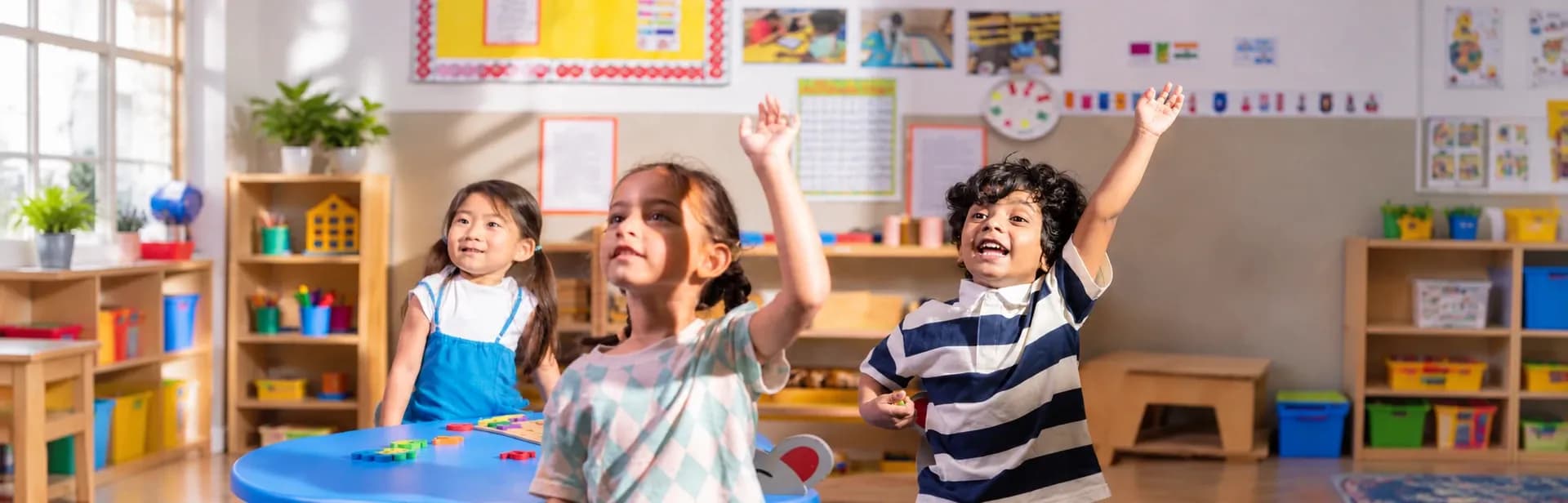
What Does a Student-Centred Classroom Look Like?
Walk into a student-centred classroom and you are likely to notice:
- Children working in small groups, pairs, or individually, rather than all facing the front
- Flexible seating and spaces that make it easy to collaborate
- Student work and questions displayed on the walls
- Students discussing, building, drawing, researching, or presenting
- A teacher crouched beside a group, asking questions rather than giving answers
- A purposeful buzz of conversation, not silence
It can look busy, but every activity is designed with a learning goal in mind.
How Can Parents Support Student-Centred Learning at Home?
You do not need to teach anything extra. Small shifts in everyday conversation make a big difference:
- Ask open questions. Try "What are you wondering about?" instead of "What did you learn today?"
- Let your child struggle a little. Offer hints and questions before giving answers.
- Offer choices. Let children choose a book, plan a weekend activity, or decide how to organise homework.
- Connect learning to real life. Cooking, shopping, travel, and walks are full of maths, science, and stories.
- Visit libraries, museums, and community spaces that connect to what they are studying.
- Celebrate effort and thinking, not only correct answers or grades.
- Stay in touch with the school and review the unit information teachers share, so home and school stay aligned.
FAQ's
Imagine a class studying how communities work. Instead of reading a chapter and answering questions, students decide what they want to know, interview people in their community, map local services, compare their findings, and present ideas to improve something in their neighbourhood. The teacher guides the process, but the students do the investigating and thinking.
Different educators phrase them differently, but four commonly cited principles are:
- Active learning: students learn by doing, questioning, and exploring
- Student voice and choice: learners help shape what and how they learn
- Collaboration: students learn with and from one another
- Teacher as facilitator, with ongoing reflection and feedback: teachers guide learning and students reflect on their progress
It prepares children for a world where information is everywhere and the ability to think, adapt, and collaborate matters more than memorising facts. It builds curiosity, confidence, and independence from an early age.
Advantages: higher engagement, deeper understanding, stronger critical thinking, independence, and confidence.
Disadvantages: it takes more planning from teachers, can feel less structured at first, and works best with smaller class sizes and well-trained teachers. Some students need extra support learning to manage their own time and tasks.
A well-run programme addresses these challenges with clear routines, scaffolding, and close teacher guidance.
Children engage more when the work feels relevant and they have a say in it. Choice, hands-on tasks, collaboration, and real-world problems give students a reason to care about what they are learning.
Yes. Young children are naturally curious, so primary school is an ideal time to build on that. The IB Primary Years Programme, for example, is designed around inquiry for students aged 6 to 11. Teachers adjust the level of independence to the child's age, offering more structure to younger learners and more freedom as they grow.
The teacher acts as a facilitator: designing learning experiences, asking guiding questions, observing and assessing each child's progress, giving feedback, and creating a supportive classroom culture. The teacher is still essential, but the thinking is shared with the students.
By giving children real responsibility. They set goals, make decisions, solve problems, and reflect on their results. With each success and each mistake, they build the confidence and habits of an independent learner.
Traditional teaching centres on the teacher delivering information and students recalling it. Student-centred learning centres on students actively constructing understanding with the teacher's guidance, using questions, collaboration, and varied forms of assessment instead of relying mainly on tests.