IB Diploma Programme ( IBDP) in Chennai
A Globally Recognised Curriculum Shaping Future-Ready Learners


IB Diploma Programme Overview
What is the IB Diploma Programme (IBDP)?
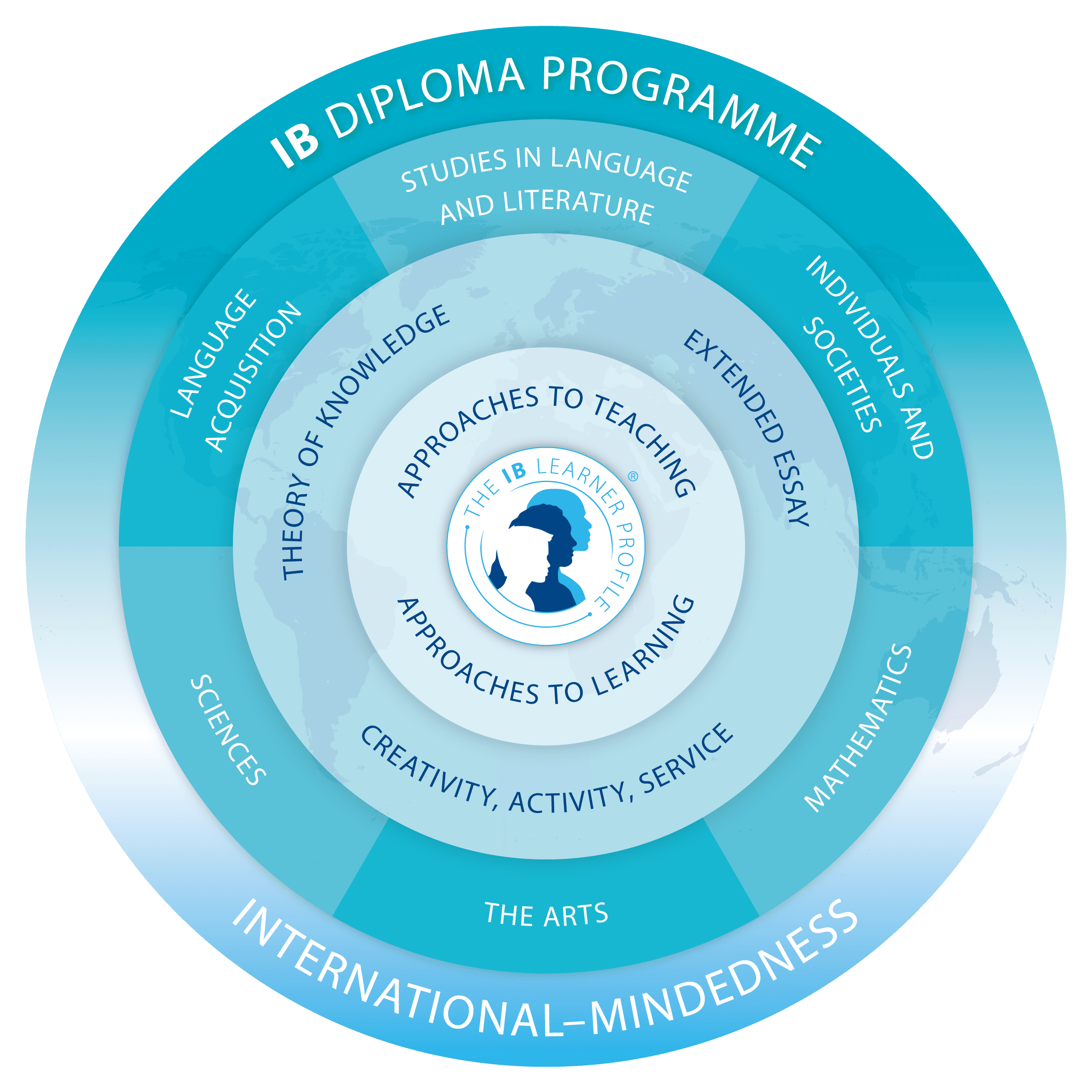
The International Baccalaureate Diploma Programme (IBDP) at HUS is a rigorous, globally recognised two-year curriculum for students aged 16–19 (Grades 11–12), designed to foster critical thinking, intercultural understanding, and global responsibility. It includes six subject groups along with the DP core: Theory of Knowledge (TOK), the Extended Essay (EE), and Creativity, Activity, Service (CAS), ensuring a well-rounded academic and personal development. Students choose courses across disciplines, gaining a comprehensive education that reflects both depth and breadth.


Key Highlights of the IB Diploma Programme

International Recognition
Accepted by top universities worldwide for its academic rigour and global relevance.

University-Ready Skills
Develops independent research, time management, and critical thinking for higher education success.

Subject Flexibility.
Students have the option to choose from a variety of Standard and Higher Level courses tailored to their interests.

Creativity, Activity, Service (CAS)
The purpose of CAS is to provide experiential learning opportunities beyond the classroom, encouraging personal development.

Theory of Knowledge (TOK)
Encourages students to reflect on the nature of knowledge and make interdisciplinary connections.

Extended Essay (EE)
The Extended Essay is a 4,000-word independent research project that builds students’ research, critical thinking, and academic writing skills for college readiness.
Why Choose IB Diploma Programme (DP)?
Who Is the IBDP For?
For curious learners aged 16 to 19, ready to embrace fresh viewpoints and push the boundaries of understanding.
For students who love asking questions, exploring ideas, and making connections across subjects.
For young minds who care about the world, different cultures, and the impact they can make through Creativity, Activity and Service (CAS).
Perfect for those who enjoy academic challenge, set personal goals, and take ownership of their learning.


IBDP Curriculum & Learning Approach
A Balanced Framework
A well-rounded IBDP curriculum that blends academic rigour with personal growth.
IB Core Components
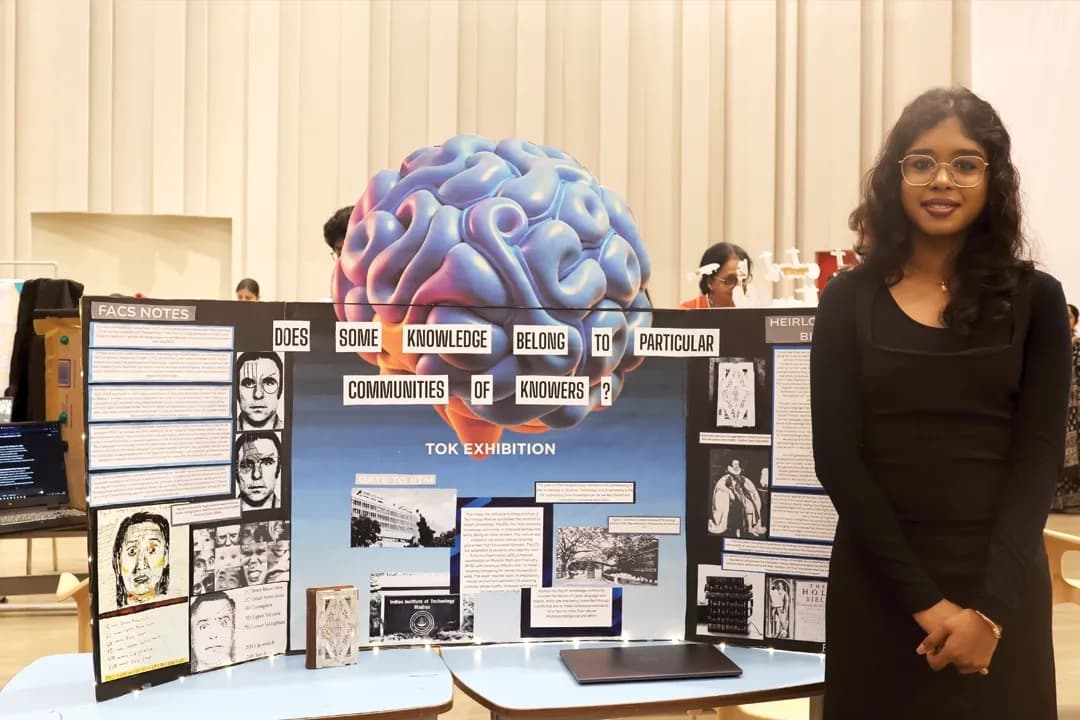
TOK, EE, and CAS foster critical thinking, reflection, and real-world engagement.
Expansive Subject Choice
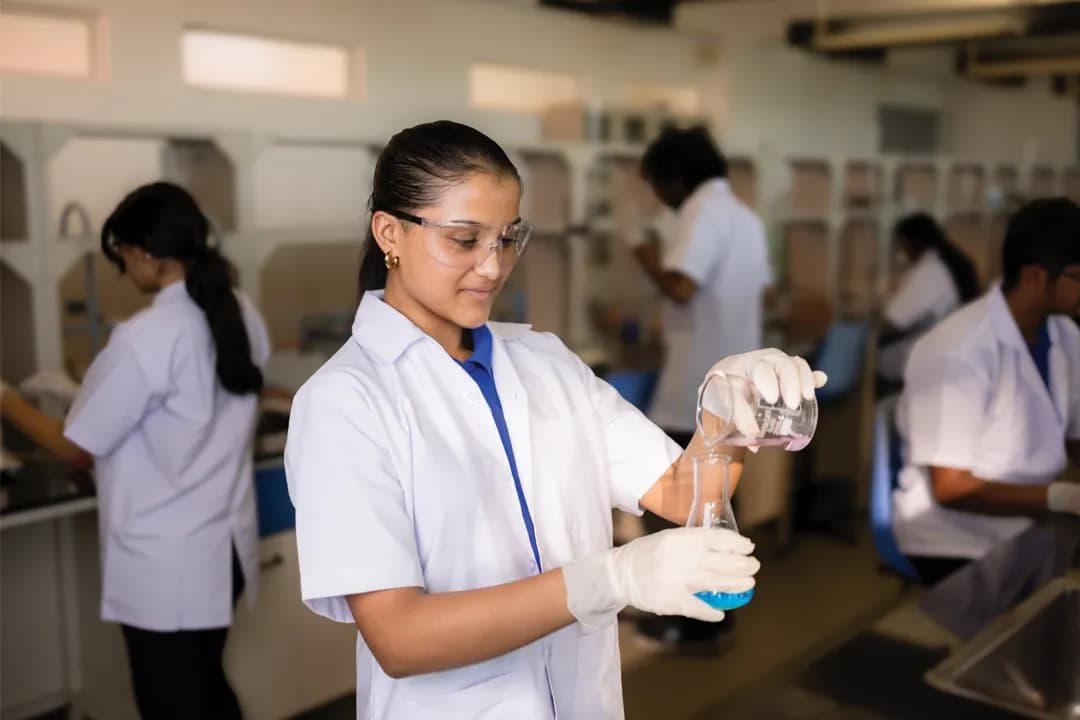
Six subject groups ensure depth and diversity across languages, sciences, arts, and more.
The IB Diploma Programme Subjects Offered at HUS
A student needs to choose from six ib subject groups in the IBDP curriculum, as follows:
| Group-1 | Group-2 | Group-3 | Group-4 | Group-5 | Group-6 |
|---|---|---|---|---|---|
Studies in Language and Literature SL/HL | Language Acquisition Ab Initio / SL / HL | Individual and Societies SL/HL | Sciences SL/HL | Mathematics SL/HL | Arts SL/HL |
| English | Hindi B SL/HL | Business Management | Biology | Analysis and Approaches | Visual Art |
| French Ab Initio | Economics | Chemistry | Application and Interpretation | ||
| French B SL/HL | Global Politics | Physics | |||
| Spanish Ab Initio | Psychology | ESS | |||
| Spanish B SL/HL | History | Sports | |||
| German Ab Initio | Digital Society | Exercise and Health Science | |||
| Tamil B SL/HL | ESS | Computer Science |
Note :
Subject availability and offered combinations may vary each academic year. Final ibdp subject choices are confirmed during the subject selection and guidance process.




Grades & Assessment (IBDP)
Each IBDP subject is graded on a scale of 1 to 7. With six subjects, students can score up to 42 points, and up to 3 additional points can be earned through Theory of Knowledge and the Extended Essay. The highest possible total is 45 points.
To be awarded the diploma, students generally need at least 24 points. They must meet the IB’s minimum requirements across the programme, including the required performance in Higher Level subjects and successful completion of CAS.
Assessment is a combination of coursework completed in school, marked by teachers and moderated by the IB, and final examinations and externally assessed components marked by IB examiners, usually held in May of the second year.

IB learners Profile
The IB Diploma Programme is built around the IB Learner Profile. Let’s see the 10 attributes that shape students not just academically, but also in how they think, communicate, and engage with the world.

Inquirers
Curious learners who ask strong questions, investigate deeply, and keep learning independently.

Knowledgeable
Students who build understanding across subjects and connect learning to real-world issues.

Thinkers
Learners who analyse challenges, solve problems, and make reasoned decisions, not just quick answers.

Communicators
Students who express ideas clearly, listen well, and collaborate with different perspectives.

Principled
Learners who act with honesty, fairness, and responsibility, especially in academic work and choices.

Open-minded
Students who respect cultures and viewpoints beyond their own, and stay willing to grow from new ideas.

Caring
Learners who show empathy and take action to support others and the community around them.

Risk-takers
Students who try unfamiliar tasks, speak up, explore new strategies, and learn from setbacks.

Balanced
Learners who manage academics with wellbeing, making space for physical health, relationships, and rest.

Reflective
Students who think about what’s working, what’s not, and how they can improve with awareness and purpose.
Admission Process for IB Diploma Programme (Batch 2026–27)
HUS welcomes families from all backgrounds, offering a transparent and inclusive process for enrolling in the International Baccalaureate Diploma Programme. Mid-year admissions are considered on a case-by-case basis.

Testimonials


At HUS my son seems to enjoy the method in which even complex topics have been taught and I feel at a foundation level, it is very important for the teachers to tap into their energies and ...

At HUS, my son truly enjoys the way even complex topics are explained in a simple and engaging manner. I believe that at the foundation level, it is essential for teachers to connect with st...
Most Read
Related Blogs

May 25, 2025
Step-by-Step Guide to Earning Your IB Diploma
The need for a well-rounded and globally recognized education has never been more critical in today's competitive world. The IB Diploma Programme gives a complicated, rigorous educational enjoy for students aged 16 to 19. It’s an exceptionally sought-after qualification that prepares college students not just for better education but also for life beyond the study room. For Students in Chennai, the IB Diploma provides a pathway that could open doorways to top universities globally, equipping college students with the abilities essential to thrive in an interconnected global world.

August 13, 2025
Developing Leadership Qualities Early: A Guide for Students
From the very first classroom enquiry to collaborative school projects, students who exhibit leadership skills today lay the groundwork for tomorrow’s success.
August 17, 2025
How Technology Prepares Students for Future-Ready Careers?
Every student comes with a world of unique abilities, inquiries, and hopes. At Hiranandani Upscale School, the nurturing of the other paths is done via a holistic intervention that comprises intellectual, emotional, social, and technological tools.
Frequently Asked Questions
No. The International Baccalaureate Diploma Programme is recognised worldwide and highly valued by leading Indian universities as well as institutions in Chennai. It helps students develop critical thinking, communication, and research skills that prepare them for success anywhere.
Yes, students coming from any recognized board are allowed to take part in the IB Diploma Programme in Chennai. They are able to build up their characteristics, so to speak, and they do this by being properly guided and well-oriented, thus making their transition to IB's inquiry and concept-driven learning style quite easy.
The IB Diploma Programme uses both internal and external assessment methods that involve international examiners, thereby guaranteeing fairness and a comprehensive evaluation.
The IB Diploma Programme in Chennai consists of six subjects selected from the groups of languages, humanities, sciences, mathematics, and arts, and besides that, students are required to finish the three core components, Theory of Knowledge (TOK), Extended Essay (EE), and Creativity, Activity, Service (CAS).
Mid-year admissions in Chennai are not very common, but they could be possible in case of students coming from another IB World School, depending on academic alignment and the student's progress.
The undergraduate IB diploma programme is subject to a 1 (lowest) to 7 (highest) grading scale for each subject, totalling to a maximum of 42 points for six subjects, and 3 points from the core components. Therefore, the maximum score that can be achieved in the diploma is 45 points.
The International Baccalaureate Diploma Programme stands apart from traditional curricula by offering a rigorous, holistic, and internationally benchmarked IBDP curriculum that focuses on critical thinking, research, and global perspectives through diverse IB Diploma courses.
Students aged 16 to 19 are eligible to enrol in the International Baccalaureate Diploma Programme in Chennai, which is designed to prepare them for university-level learning through the comprehensive IBDP curriculum.
Yes, the International Baccalaureate Diploma Programme is widely recognised by universities and institutions across the globe, with its IB Diploma courses valued for academic rigour and university readiness.
Applications for the International Baccalaureate Diploma Programme typically open prior to the academic year (2026-27), and students interested in the IBDP curriculum are encouraged to apply as early as possible due to limited seats in IB Diploma courses.
Other than IB Diploma, HUS offers a full IB curriculum: Early Years Programme (EYP), Primary Years Programme (PYP), and Middle Years Programme (MYP) in Chennai. Each stage focuses on inquiry-based learning, global perspectives, and holistic development.
The IB Diploma Programme works differently from most board-style Class 11–12 routes. Along with exams, students are assessed through subject-based coursework across the two years. They also complete TOK, the Extended Essay, and CAS, which means learning is not only about syllabus coverage, it’s also about research, writing, reflection, and application. Another important difference is the HL/SL structure, which lets students learn more about a few subjects while still getting a good mix of topics.
HL (Higher Level) and SL (Standard Level) are simply two levels of depth. Most students take 3 HL subjects and 3 SL subjects. HL needs more time and more detail, so students usually choose HLs based on what they enjoy, what they’re strong at, and what they might want to study later. At HUS, subject choices are finalised through guidance so the combination stays realistic, not overloaded.
The Extended Essay is a research paper (up to 4,000 words) where a student investigates a question in an IB subject they’re interested in. At HUS, students don’t do this in one shot; they work through it in stages: choosing the topic, narrowing the research question, gathering sources, writing drafts, and improving the final version with feedback. The idea is to help students learn proper research and academic writing the way universities expect.
Enquire Now
You can learn more about the IB DP programme—its educational framework, teaching approach, learner profile, and key objectives, by visiting: www.ibo.org
IBDP Syllabus at HUS: A Look at the Full Two-Year Course
The IBDP syllabus at HUS follows the official International Baccalaureate framework. Students take six subjects from six subject groups, three at Higher Level (HL) and three at Standard Level (SL), plus the three DP Core requirements. The IBDP syllabus runs across Grades 11 and 12 and ends with externally assessed examinations in May of Grade 12.
The IBDP syllabus at HUS is the same official IBDP syllabus used by every authorised IB school worldwide. The subject guides are set by the IBO. What varies between schools is how the IBDP syllabus is delivered, including teacher experience, lab equipment, library resources, and the depth of internal assessment support.
Across both years, the IBDP syllabus runs on continuous internal assessment plus final external exams. For most subjects, internal assessment counts for 20 to 30 percent of the final grade, and the external exams cover the rest. The IBDP syllabus also expects students to manage their own time across six subjects plus the DP Core, which is a step up from most Grade 10 board environments.
IBDP Curriculum at HUS: How the Two Years Are Structured
The IBDP curriculum in Chennai is split into two academic years. Grade 11 covers the introduction to each subject, internal assessment groundwork, the start of Extended Essay research, and TOK foundation work. Grade 12 covers the second half of the IBDP curriculum, all final internal assessments, and the run-up to external exams in April and May.
The IBDP curriculum is divided across six subject groups, the three DP Core elements, and a defined set of approaches to teaching and learning. The IBDP curriculum is not a textbook syllabus. It is a skills-and-content framework, and our teachers build each unit around both.
The IB program curriculum at HUS chennai gives students room to choose subjects that match their university plans. The IB program curriculum also forces students to take subjects across multiple disciplines so they cannot specialise too narrowly. This breadth is a feature of the IB program curriculum at every authorised school worldwide.
For families coming from CBSE or ICSE, the IBDP curriculum looks different from what their child is used to. The IBDP curriculum requires more written work, more research, and more independent thinking. The CBSE syllabus is more textbook-driven; the IBDP curriculum is more skill-driven.
Subject Groups, Subject Choices and the Subjects List at HUS DP
The DP at HUS offers six subject groups. Each group has its own purpose within the IB framework. Below is the full IBDP subjects list available at our Chennai campus.
Group 1: Studies in Language and Literature
English Language and Literature at SL and HL.
Group 2: Language Acquisition
Spanish Ab Initio and SL, French Ab Initio and SL, Hindi SL and HL, Tamil SL, ESL SL.
Group 3: Individuals and Societies
Business Management, Economics, Global Politics, Psychology, History at SL and HL.
Group 4: Sciences
Biology, Chemistry, Physics, Environmental Systems and Societies (ESS) at SL and HL.
Group 5: Mathematics
Mathematics Analysis and Approaches, Mathematics Applications and Interpretation at SL and HL.
Group 6: Arts and Electives
Visual Arts (or substitute a second Group 3 or 4 subject), Sports/Exercise/Health Science, Computer Science, Digital Society at SL and HL.
These IB Diploma subjects are designed so students take one subject from each group, giving balanced exposure across languages, humanities, sciences, mathematics, and arts. The IBDP subject groups also drive the way the timetable is built at HUS.
The IBDP subject choices students make depend on their university plans and their academic strengths in Grade 10. Three subjects are taken at HL (around 240 teaching hours each) and three at SL (around 150 teaching hours each). The IBDP subject choices determine the depth of work in each area.
The full IBDP subjects list above represents what is available at HUS for 2026-27. The IBDP subjects list may change each year slightly based on cohort interest and teacher availability. The IB DP subjects available at HUS can be confirmed during your admissions visit.
Subject-Specific IBDP Syllabus Highlights at HUS (Chennai)
Each subject in the IB follows its own official syllabus from the IBO. Here is a quick look at some of the most-picked subjects in the IBDP subjects list at HUS.
IBDP Maths Syllabus and IBDP Maths HL Syllabus
The math syllabus splits into two routes: Analysis and Approaches (for engineering, mathematics, hard sciences) and Applications and Interpretation (for business, social sciences, design). The IBDP maths HL syllabus covers calculus, algebra, statistics, vectors, and proof at depth. Students taking the maths HL syllabus usually plan to study engineering, mathematics, physics, or computer science at university.
IBDP Physics and IBDP Physics HL Syllabus
Physics covers mechanics, thermal physics, waves, electricity, and atomic and nuclear topics. The physics HL syllabus adds depth in fields, oscillations, and detailed atomic structure. Internal assessment for IBDP physics involves an individual investigation and a lab report.
IBDP Chemistry HL Syllabus
The chemistry HL syllabus covers atomic structure, periodicity, bonding, kinetics, equilibrium, acids and bases, redox, organic chemistry, and measurement and data processing. Practical lab work is integrated throughout both years.
IBDP Biology and IBDP Biology Syllabus
Biology covers cell biology, molecular biology, genetics, ecology, evolution, and human physiology. The IBDP biology syllabus also includes options chosen by the school. Our biology students complete an individual investigation as part of their internal assessment.
IBDP Economics Syllabus
The economics syllabus covers microeconomics, macroeconomics, international economics, and development economics. Internal assessment involves commentaries on real-world economic articles.
IBDP English Language and Literature
English is the most-taken Group 1 subject at HUS. The English Language and Literature course covers different text types, literary works in translation, and oral commentaries. The course pushes students to read critically across journalism, fiction, drama, and digital media.
IBDP History
History at HUS covers world history themes across both years. Internal assessment is a historical investigation of around 2,200 words on a topic the student selects.
IBDP Global Politics
Global politics covers power, sovereignty, human rights, development, and peace and conflict. This Group 3 subject draws students interested in international relations, law, public policy, and social sciences.
IBDP Psychology Syllabus
The psychology syllabus covers biological, cognitive, and sociocultural approaches plus options like abnormal psychology or developmental psychology. Internal assessment involves a small experimental study.
IBDP Computer Science Syllabus
The computer science syllabus covers system fundamentals, computer organisation, networks, computational thinking, programming, and abstract data structures.
The DP Core at HUS: IBDP Theory of Knowledge (TOK), Extended Essay, and CAS
Beyond the six subjects, every student completes the DP Core. The DP Core has three parts: Theory of knowledge (TOK), the Extended Essay, and Creativity, Activity, Service (CAS).
IBDP theory of knowledge is a 100-hour course examining how knowledge is constructed. Students take IBDP TOK across both years of the diploma. The theory of knowledge course is assessed through one essay on a prescribed title and an internally assessed oral exhibition.
IBDP TOK is not graded like the six subjects. Instead, TOK and the Extended Essay together contribute up to three bonus points toward the final 45-point diploma score.
The Extended Essay is a 4,000-word research paper on a topic the student chooses. Topic mentorship at HUS begins in Grade 11 so students have time to settle on a genuinely interesting topic. For a step-by-step walkthrough of the point structure, see our step-by-step guide to earning your IB Diploma.
CAS, which stands for Creativity, Activity, Service, runs across both years. Students log experiences across creative work, physical activity, and community service.
How Students Move from MYP into the IB Diploma Curriculum at HUS
Students who complete our IB Middle Years Programme at HUS settle into the IBDP curriculum faster than students transferring in from other boards in Grade 11. They already know how to plan extended writing, cite sources properly, and run independent investigations.
For students joining the DP from CBSE, ICSE, or IGCSE backgrounds, our first six weeks include study-skills sessions covering essay writing, source evaluation, and lab report structure. To start the application, follow the HUS admission process.
University Counselling for DP Students at HUS
University counselling at HUS starts in Grade 11. The first conversation maps the student's interests against potential destinations, universities in India, the UK, the US, Canada, Australia, Singapore, Europe, or elsewhere. The counsellor and the student then build a working shortlist of 8 to 12 universities.
Application timelines vary by destination. UK applications through UCAS close in January of Grade 12. US applications through the Common App have a mix of November early-action deadlines and January regular-decision deadlines. Singapore, Australian, and Canadian applications usually run later in Grade 12. Indian university applications around CUET happen in March and April.
Counselling support at HUS includes application essay reviews, university shortlisting workshops, mock interviews for universities that require them, and parent sessions on financial planning for overseas degrees. Students also get guidance on standardised tests like the SAT or TOEFL, where required.
By the end of the International Baccalaureate Diploma, every student leaves HUS with at least one confirmed university place or a clear plan for the year ahead. The counselling team stays in touch with students for one year after graduation to help with first-year transitions.