IB Middle Years Programme (MYP)
Building Resilience, Responsibility, and Readiness for Higher Learning.

IB Middle Years Programme Overview
What is the IB Middle Years Programme (IB-MYP)?
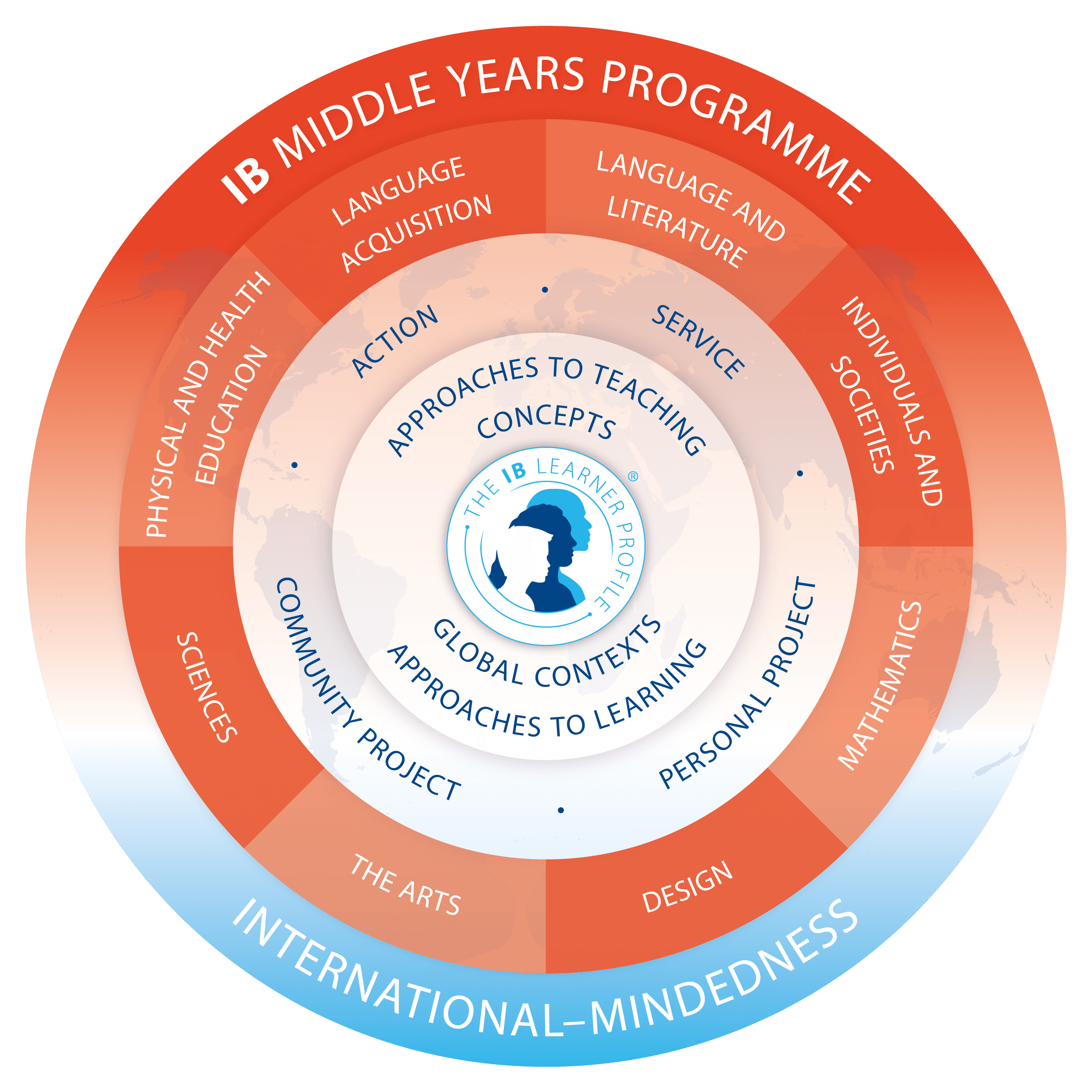
The International Baccalaureate Middle Years Programme (IB-MYP) is a dynamic educational framework for students aged 11 to 16 (Grades 6 to 10), designed to develop critical thinking, global awareness, and personal growth. At HUS, the IB MYP curriculum blends academic rigour with real-world application, encouraging students to make meaningful connections across subjects. Through the IB Middle Years Curriculum, learners are empowered to become reflective, responsible, and globally minded individuals.


Key Highlights of the IB MYP Programme

Holistic IB MYP Curriculum
A well-rounded framework that nurtures critical thinking, creativity, and ethical awareness.

Real-World Global Contexts
Subjects are taught through global themes, linking learning to real-life issues.

Concept-Based Learning
Focuses on core concepts to encourage deeper understanding across disciplines.

Approaches to Learning (ATL)
ATL builds thinking, communication, research, self-management, and social skills that help students become effective and independent learners.

Creative and Practical Exploration
Promotes artistic growth through visual arts, design, and performance.

Service as an Action
Through Service as Action, students engage in hands-on experiences that create a positive impact on communities and the environment.

Why Choose IB Middle Years Programme (MYP)?
The IB Middle Years Programme nurtures independent thinkers, responsible global citizens, and confident learners through an interdisciplinary, inquiry-driven curriculum.
Who Is IB MYP For?
For curious learners aged 11–16, driven to seek new perspectives and expand their horizons.
For young visionaries who value cultural exchange and create impact through Service in Action.
For those who delight in linking concepts, spotting patterns, and thinking beyond conventional boundaries.
For thinkers who set ambitious goals and take ownership of their learning path.

IB MYP Curriculum & Learning Approach
Concept-Driven Learning
The IB Middle Years Programme (MYP) emphasizes concept-driven learning, helping students move beyond memorization to develop a deeper understanding. Students explore big ideas and relationships that connect subjects to real-world contexts.
Interdisciplinary Framework
The IB Middle Years Curriculum fosters critical thinking through interdisciplinary learning, helping students explore issues across subjects to enhance their ability to transfer knowledge, deepen their understanding of global and real-world issues, and develop collaborative and problem-solving skills.
Global Contexts
In IB MYP, Inquiry-based teaching and learning is a core approach that engages students in active understanding through questioning, exploration, and real-world problem investigation. It promotes meaningful inquiry, collaborative research, deeper comprehension, practical application, and curiosity.
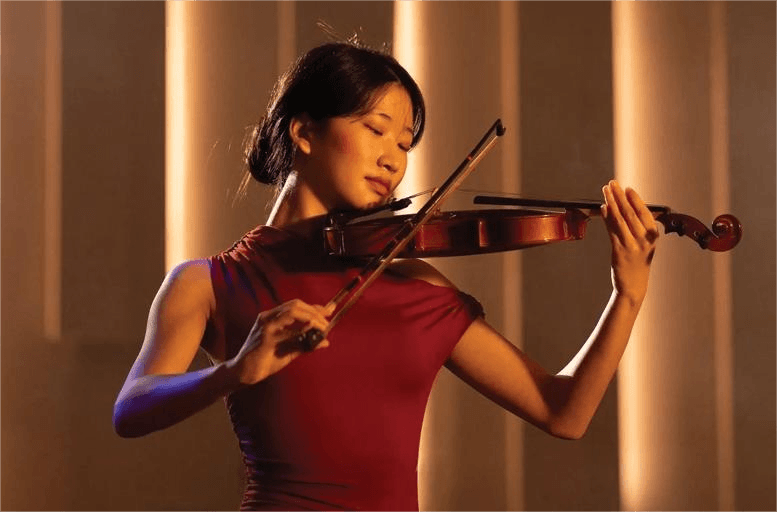
Skill-Based Development
The IB MYP curriculum balances academic rigour with life skills, focusing on communication, collaboration, and reflection.
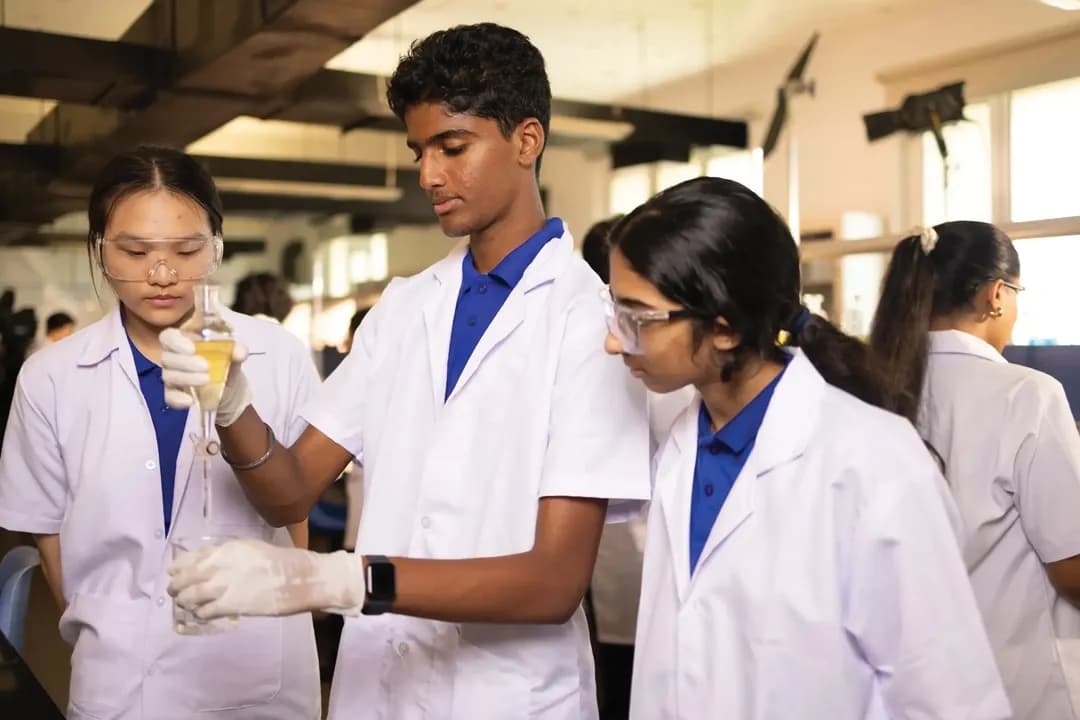
Personal Project
The MYP Personal Project, a mandatory requirement for Grade 10 (MYP5) students, is a self-directed journey where learners set goals, document their process, and develop key ATL skills. Personal Project promotes independence and innovation, allowing students to pursue their individual interests with depth and purpose.




Grades & Assessment in MYP
Assessment in the MYP is criterion-based, meaning students are evaluated against clear learning objectives rather than compared to one another. Each subject is assessed using four criteria, with grades awarded on a scale of 1 to 7. Teachers use a variety of methods, such as tests, projects, presentations, and real-world tasks, along with detailed feedback, peer, and self-assessment, to support continuous improvement. Successful completion of the MYP Certificate requires students to achieve a minimum total score of 28 out of 56, along with meeting additional programme requirements such as the Personal Project, Service as Action, and subject completion expectations.
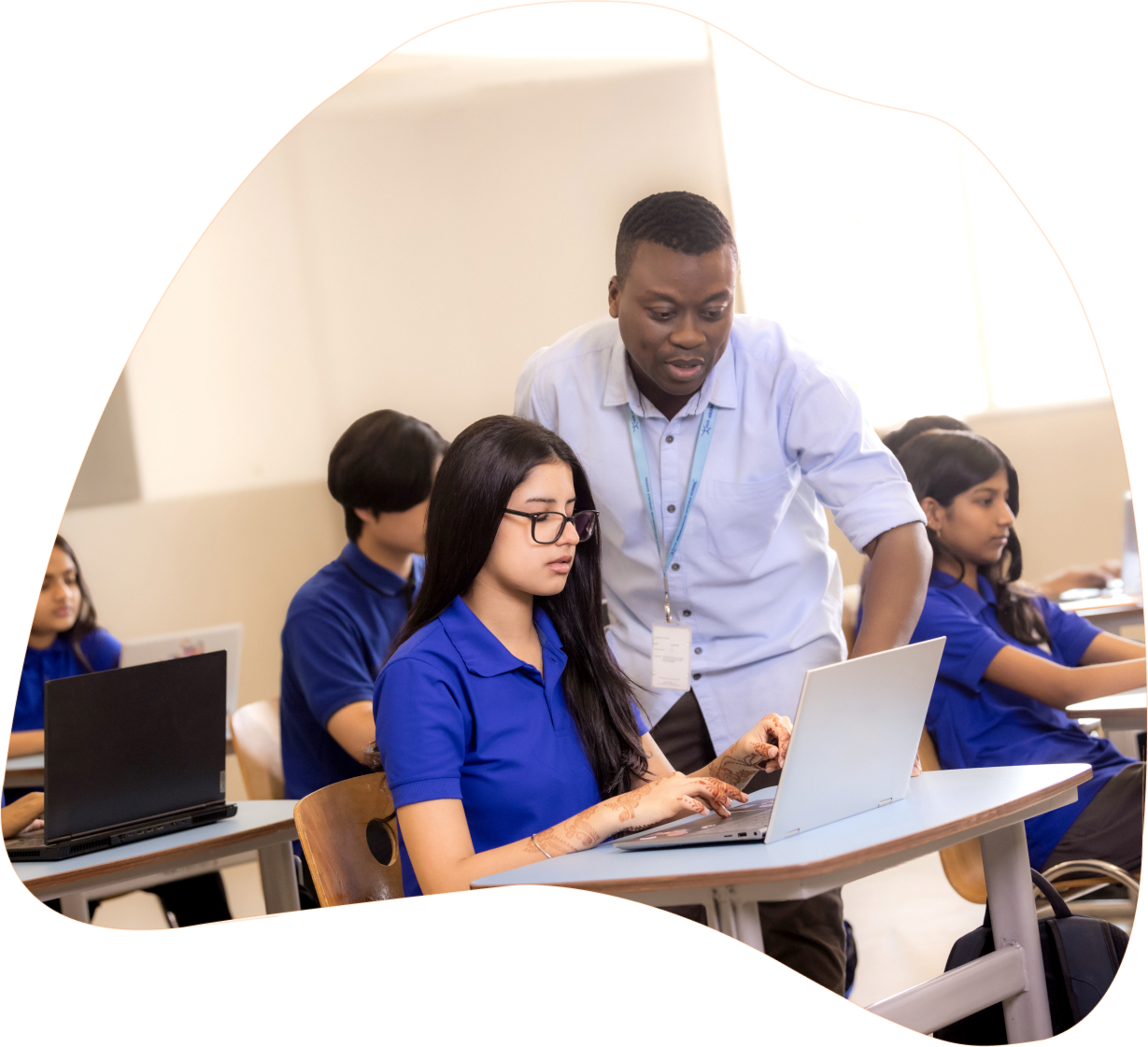
MYP Subject Groups
| Subject Groups | MYP 1 | MYP 2 | MYP 3 | MYP 4 | MYP 5 |
|---|---|---|---|---|---|
| Language & Literature | English | English | English | English | English |
| Language Acquisition | French Or Hindi Or Spanish & Marathi | French Or Hindi Or Spanish & Marathi | French Or Hindi Or Spanish & Marathi | French Or Hindi Or Spanish & Marathi | French Or Hindi Or Spanish & Marathi |
| Individuals & Societies | Integrated Humanities | Integrated Humanities | Integrated Humanities | Integrated Humanities Or Geography | Integrated Humanities Or Geography |
| Sciences | Integrated Sciences | Integrated Sciences | Integrated Sciences | Physics, Chemistry, Biology | Physics, Chemistry, Biology |
| Mathematics | Mathematics | Mathematics | Mathematics | Standard Mathematics Or Extended Mathematics | Standard Mathematics Or Extended Mathematics |
Shaping the IB Learner Profile at HUS
These ten traits are at the heart of the PYP and help shape students into thoughtful, caring, and globally aware people.

Inquirers
Inquirers are people who are interested in learning new things on their own and ask good questions.

Knowledgeable
Students who know more about many areas and can apply what they're learning to real-life problems.

Thinkers
Students who are thinkers don't just give quick answers; they use logic to look at problems, come up with solutions, and make choices.

Communicators
Students who are able to say what they want to say, listen well, and work with others who have different ideas.

Principled
Learners with strong morals who are honest, fair, and responsible, especially when it comes to schoolwork and decisions.

Open-minded
Students who are open-minded, accept other cultures and points of view, and are ready to learn from new ones.

Caring
Students who care about others and the world around them and act to help others.

Risk-takers
Students who take risks: those who try new things, speak up, try out new tactics, and learn from their mistakes.

Balanced
Learners who balance schoolwork with their health and well-being by making time for relationships, rest, and physical health.

Reflective
Students who are reflective think about what they're doing well, what they could do better, and how they can do it with knowledge and purpose.
Admission Process for IB Middle Years Programme (Batch 2026–27)
HUS welcomes families from all backgrounds, offering a transparent and inclusive process for enrolling in the IB Middle Years Programme. Mid-year admissions are considered on a case-by-case basis.
Testimonials

Being at HUS, both my daughters are growing up to be strong and confident individuals. My older daughter is an artist. She loves art, drama, and music, and HUS provides so many different ave...

Most Read
Related Blogs

June 16, 2025
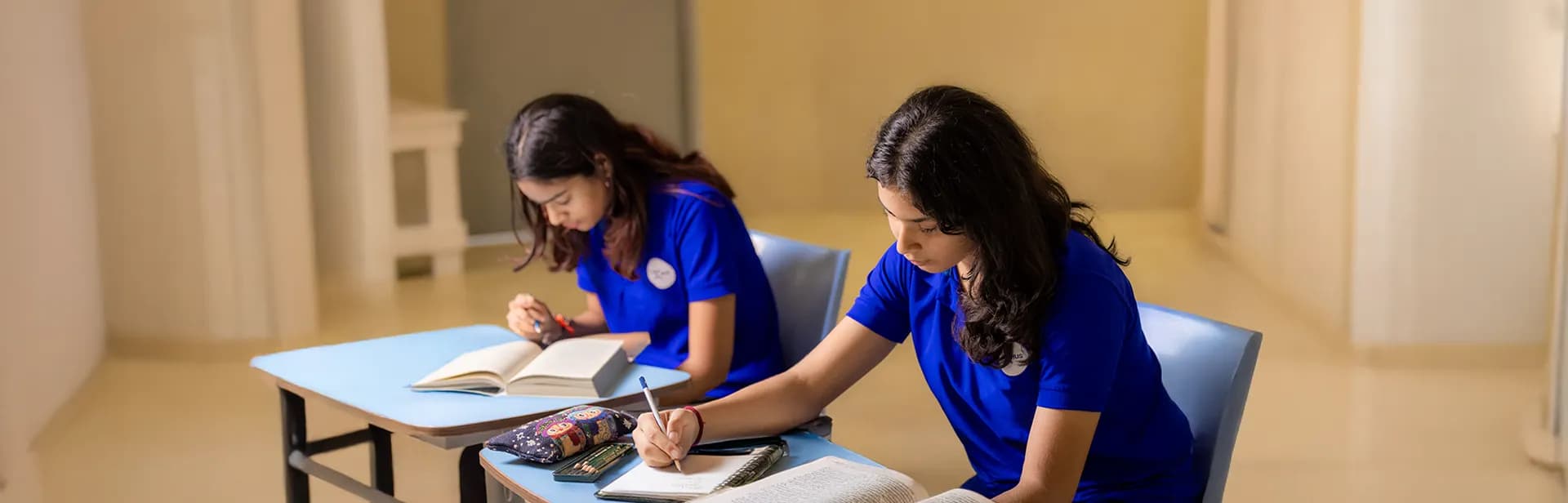
IB MYP Assessment & Personal Project: A Parent’s Guide to How Grading Works
If you've just enrolled your child at HUS, or you're weighing the switch from CBSE, chances are the first report card is what actually worries you. “1 to 7” doesn't mean much until you know what it's measuring, and the Personal Project sounds bigger and scarier than it needs to be. This guide walks through both, in plain terms.

July 22, 2025
Why Parents are Choosing IB Schools for their Children
In today’s dynamic world, success depends on real-world skills that help children adapt, think critically, and lead with confidence. This is why many parents are choosing the IB board for its focus on developing lifelong competencies like analytical thinking, intercultural awareness, communication, and collaboration.
June 5, 2025
IB vs CBSE vs IGCSE: Which Study Board Is Right for You?
Selecting the right educational board for your child can feel overwhelming. With multiple curricula available, each promising unique advantages, parents in Chennai often find themselves navigating a maze of options. Among the most sought-after boards are the IB, CBSE, and IGCSE.
Frequently Asked Questions
The International Baccalaureate Middle Years Programme stands apart from traditional curricula by offering a globally benchmarked, inquiry-driven IB MYP curriculum that fosters critical thinking, creativity, and real-world connections.
The international baccalaureate middle years programme is designed for students aged 11 to 16 years, providing a structured yet flexible IB MYP curriculum that supports holistic development during these formative years.
Yes, the International Baccalaureate Middle Years Programme is globally recognised, with the IB MYP curriculum adopted by leading international schools across the world for its academic rigour and balanced learning approach.
Applications for the IB Middle Years Programme can be submitted as per the school’s admission cycle, allowing timely enrolment into the internationally recognised IB MYP curriculum.
For students aged 11 -16, the IB MYP is an interdisciplinary course that helps them develop academic and personal skills, while the IB DP is a two-year pre-university course for students between 16 to 17 that offers subjects and extensive research.
The IB MYP is a five-year programme for students aged 11 to 16 (Grades 6 to 10). It bridges the gap between the Primary Years Programme and the Diploma Programme, helping students move from broad exploration to deeper, more structured learning. The focus isn't just on what to learn, it's on how to think, question, and apply knowledge across real-world situations.
MYP students study eight subject groups: Language and Literature, Language Acquisition, Individuals and Societies, Integrated Sciences, Mathematics, Design, Physical and Health Education, and Arts. In Grade 9, students make guided choices in sciences, humanities, and a portfolio subject. Every year includes at least one unit of Interdisciplinary Learning.
Assessment in the MYP is both formative (ongoing feedback throughout the year) and summative (at the end of each unit). Teachers use a range of formats, written tasks, oral presentations, projects, and performances, all evaluated against MYP subject criteria. Both types contribute to semester grades. HUS holds parent orientation sessions to walk families through assessment in practice.
Yes, and that's intentional. The MYP is built around skills and conceptual understanding, not content memorisation. Teachers draw from academic articles, case studies, multimedia, and project-based tasks. This makes learning more relevant and helps students build their own understanding rather than simply absorbing a fixed set of facts.
Parents don't need to master the MYP framework to support their child. HUS runs regular parent sessions throughout the year, in groups and one-on-one, to keep families informed and involved. Most parents find they learn alongside their child. The school treats it as a shared journey.
Every unit is connected to a real-world context. A science task might ask students to design a floating structure for flood-prone regions, applying principles of buoyancy while thinking about sustainability. Students regularly face problems with no single right answer; that's the point. It builds the kind of thinking that transfers well beyond school.
IGCSE is subject-specific; students pick individual subjects, study them independently, and sit exams in each. IB is interdisciplinary, subjects are connected, and students are regularly asked to draw links between them. The IB also integrates arts, physical fitness, research skills, and social engagement as core parts of the curriculum, not add-ons.
Enrolment in the MYP at HUS is for the full five-year duration (Grades 6 to 10). Switching back to another board mid-programme isn't possible within the school. That said, HUS has structured academic support and a Foundation Programme in place to help students adjust, and most find their footing within the first term.
The MYP teaches students the skills that colleges and employers always want: critical thinking, communication, teamwork, and flexibility. The program includes group projects, presentations, and real-world problem-solving tasks.
Two major projects sit at the heart of the MYP. The Community Project (for 8th or 9th graders) is a group service project in which students find a real need and do something about it. The Personal Project (for 10th graders) is completely self-directed; students pick their own topic, set their own goals, and write about the whole process. It's the most independent work students will do before the DP.
In a unit on climate change, students might study the greenhouse effect in Science, analyse the socio-economic impact on coastal cities in Individuals and Societies, interpret CO₂ data in Mathematics, and write a persuasive essay on climate action in English. No single subject gives the full picture. Combining them builds a deeper, more honest understanding.
Physical and Health Education is a core subject in the MYP, not an optional extra. Students build knowledge about healthy living alongside practical physical skills, teamwork, and leadership. At HUS, emotional well-being is supported through counselling services, well-being programmes, and teachers trained to notice when a student needs more than academic support.
The IB Learner Profile describes ten qualities the programme develops: Inquirer, Knowledgeable, Thinker, Communicator, Principled, Open-minded, Caring, Risk-taker, Balanced, and Reflective. In the MYP, these aren't aspirational labels, they're built into how units are designed and how students are assessed. The profile shapes the kind of person the programme is trying to develop, not just the kind of student.
Progress reports and parent-teacher meetings provide more detailed updates at regular intervals. The most telling sign, though, is often that your child at home, MYP students who are engaged, tend to bring their questions and ideas well beyond the classroom.
Yes. HUS has a Career Guidance team that works with students from Grade 9. Our guidance team arranges regular sessions focused on preparing for college and exploring career options, helping students build their profiles, choose universities, write applications, and obtain recommendation letters. They also help students get internships to gain real-world experience.
Homework in the MYP is tied to what's actually being taught, it's not assigned to fill time. During regular periods, the workload is steady and manageable. Around assessments or major projects, students will naturally need to put in more time. The expectation is that homework is meaningful and that students take ownership of managing their own deadlines. That habit of self-management is something the MYP builds deliberately.
Enquire Now
You can learn more about the IB MYP programme—its educational framework, teaching approach, learner profile, and key objectives, by visiting: www.ibo.org
The International Baccalaureate Middle Years Programme at HUS: How It Works
The International Baccalaureate Middle Years Programme at HUS runs across Grades 6 to 10, MYP Year 1 through MYP Year 5. Students take eight subject groups every year, and the depth in each subject increases as they move up.
What makes the International Baccalaureate Middle Years Programme different from most boards in India is the way subjects connect. A history unit might pull in geography, civics, and economics. A science investigation might involve mathematics and English writing. This connected style of learning sits at the core of MYP.
MYP also runs on inquiry. Students do not just memorise facts. They ask questions, investigate, and present what they found. By Grade 10, most of our students are comfortable handling a 1,500-word essay, a lab report, and a presentation in the same week.
IB MYP Subjects at HUS Chennai: The Eight Subject Groups
The IB MYP subjects at HUS follow the official MYP framework with eight subject groups. Here is what each one covers.
Language and Literature
English Language and Literature throughout. Focus moves from reading skill in the early years to literary analysis and original writing by Grade 10. This sits at the heart of the IB Middle Years Programme in Chennai.
Language Acquisition
A second language is part of MYP at HUS. Students continue or begin a second language based on prior exposure, with the phase level matched to their reading and conversational ability.
Individuals and Societies
History, geography, economics, and civics in one integrated framework. Students work on inquiry questions like how migration shapes a city.
Sciences
Biology, Chemistry, and Physics as separate strands with shared themes. Lab work begins in Grade 6 and builds toward independent investigation by Grade 10.
Mathematics
A single MYP mathematics route through Grade 8, then Standard or Extended Mathematics in Grade 9 and 10 based on readiness and intended Grade 11 path.
Arts
Visual Arts and Performing Arts through all five MYP years. Students develop a process portfolio alongside finished work, useful preparation for IB Visual Arts at DP.
Physical and Health Education
Skills development, fitness, team sports, and health concepts together. Assessment looks at planning, performance, and reflection. Our PHE programme draws on the wider HUS sports programme that includes Football, Cricket, Basketball, Table Tennis, and Athletics.
Design
Structured product design, digital design, and basic coding. The Year 5 design project is often the first long-form independent project a student completes within the IB MYP subjects framework.
MYP in Chennai: Why HUS Parents Choose Us
Families considering MYP in Chennai usually weigh four things during their school search.
Class size
MYP sections at HUS are capped at 20 students. Class size matters in MYP because subject teachers give written feedback on assignments every two to three weeks. Specific feedback only works in smaller groups.
Sport and arts time
The MYP timetable at HUS includes regular PHE blocks and dedicated time for Visual Arts and Performing Arts. We do not cut these in middle grades.
Assessment style
MYP uses four criteria per subject, each scored 1 to 8. Students get feedback against each criterion, not a single overall mark. Parents can see exactly which skill needs more work.
Preparation for the IB Diploma Programme
Students who complete MYP at HUS tend to settle into our IB Diploma Programme faster than students transferring in from other boards in Grade 11. The International Baccalaureate Middle Years Programme builds the writing and inquiry skills that the IBDP then takes further.
From the IB Primary Years Programme to Middle Years Programme at HUS
Students moving up from our IB Primary Years Programme into MYP have a clear advantage in the first term of Grade 6. They already know how inquiry works, how to manage independent investigations, and how to present findings.
For students joining MYP from CBSE or ICSE Grade 5 or 6, our first half-term focuses on settling in. Study skills sessions cover note-taking, source citation, and lab report formats. Parents weighing boards before deciding can also read our comparison of IB, CBSE and IGCSE.
Preparing for the IB Diploma Programme After MYP
The MYP Personal Project in Year 5 (Grade 10) is the bridge between MYP and the IB Diploma at HUS. Each student plans, runs, and reflects on a year-long independent project. This is the first time most students do a sustained piece of work entirely on their own.
The Personal Project structure (choose a goal, plan the work, execute, reflect) is exactly the structure students use again when they start the Extended Essay in Grade 11. Students who finish MYP at HUS arrive at the IBDP already knowing how to handle this kind of work. To begin the application process, follow the HUS admission steps.
Approaches to Teaching and Learning in IB MYP at HUS
Beyond the eight subject groups, MYP students at HUS develop five clusters of skills called Approaches to Learning, or ATL. These skills cut across every subject and grow steadily across the five MYP years.
- Thinking skills: critical thinking, creative thinking, transfer of learning across subjects
- Communication skills: clear writing, presenting, reading widely, listening with intent
- Social skills: collaboration, conflict resolution, leading and following in groups
- Self-management skills: organisation, time-blocking, looking after wellbeing
- Research skills: information literacy, source evaluation, ethical use of media
Our teachers map each unit to two or three ATL skills. Over the five years, students should encounter every ATL skill many times, in many contexts. This is what makes the International Baccalaureate Middle Years Programme more than a content syllabus; it is a skill-building framework.
Middle Years Programme Global Contexts: Six Lenses Used in Every Unit
Each MYP unit at HUS is framed using one of six Global Contexts. These are the lenses students use to make sense of the content.
Identities and Relationships
Who am I and how do I relate to others? Used for personal development units, friendship, family, identity, and ethics topics.
Orientation in Space and Time
Where are we and when are we? Used for history units, geography units, migration, civilisations, and personal histories.
Personal and Cultural Expression
How do we express ideas? Used for literature, arts, language, and creative expression units.
Scientific and Technical Innovation
How do we understand and use the natural world? Used for most science units and design technology.
Globalisation and Sustainability
How are local and global systems connected? Used for economics, environmental science, and current-affairs units.
Fairness and Development
What is fair, and how do we measure progress? Used for civics, human rights, and social-issue units.
Service as Action in MYP at HUS
Service as Action is a required part of MYP at HUS. Across Grades 6 to 10, every student logs experiences across three types of service.
- Direct service: working directly with people or other beneficiaries (tutoring younger students, visiting a community centre, helping at a campus event)
- Indirect service: not face-to-face but still meeting a real need (writing for a school magazine, designing posters for a campaign, preparing materials for a community group)
- Advocacy and research: speaking up for or studying a cause (awareness campaigns, surveys on local issues, research presentations)
Students set their own service goals and reflect on what they learned. By Grade 10, most students at HUS have completed 30 to 50 hours of service across the three types. These experiences also feed into the MYP Personal Project for several students.
eAssessment in MYP at HUS
MYP Year 5 students at HUS can sit IB eAssessment exams in Grade 10. The eAssessments are on-screen exams in Language and Literature, Sciences, Mathematics, Individuals and Societies, plus Interdisciplinary Learning.
Students who do well in eAssessment receive the IB MYP Certificate, which is recognised internationally as equivalent to Grade 10 board completion. The international baccalaureate middle years programme certificate also helps with cross-board recognition if students later move.
Mock papers in Grade 9 and the first half of Grade 10 help students get used to the on-screen format. The actual exams happen in May of Grade 10.