What Does It Mean to Be Caring in the IB?

July 6, 2026
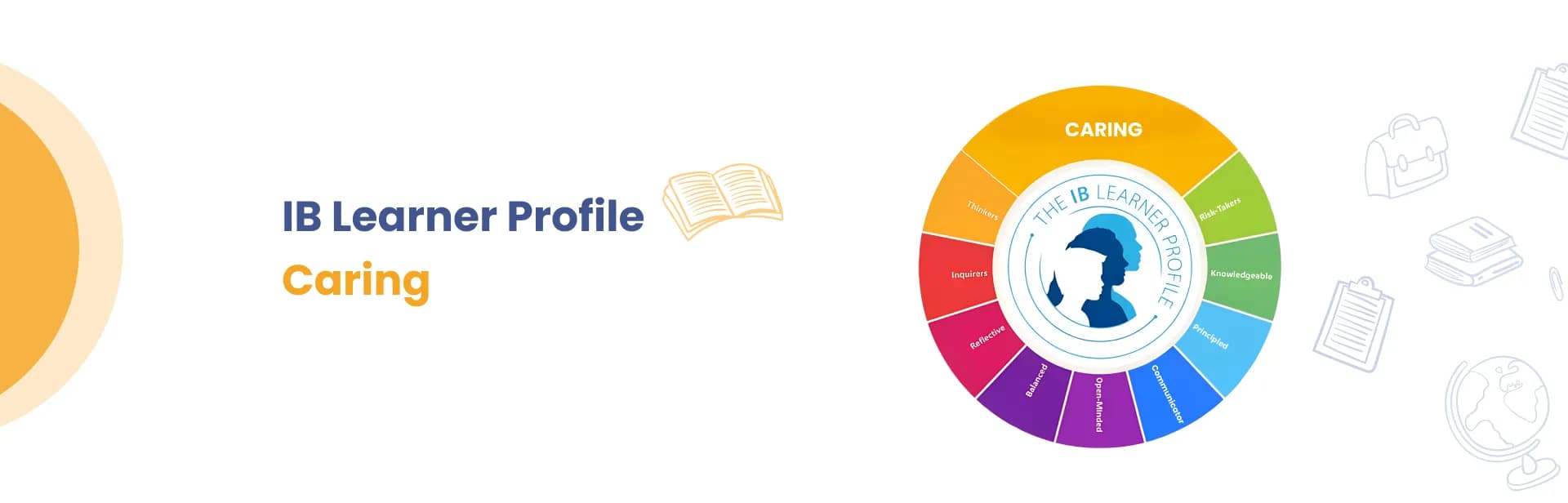
Smart students are everywhere. Caring students are rarer, and far more valuable. Caring sits in the middle of the ten attributes of the IB Learner Profile because the IB believes school should produce people who notice others, not just people who out-perform them. This blog explores what caring really means in the International Baccalaureate, how it grows across each programme stage, and how HUS Chennai weaves it into daily school life.
The IB Definition of Caring
The IB describes caring learners as showing empathy, compassion and respect. They have a personal commitment to service. They act to make a positive difference in the lives of others and the world around them.
Notice the word "act". Caring in the IB is not a feeling. It is a habit that shows up in behaviour. A child who feels sorry for a hungry classmate is feeling empathy. A child who shares lunch with them is being caring.
Why the Caring Attribute Matters More Than Ever
Look at any university or employer survey today and "soft skills" sit at the top of the wish list. Empathy, teamwork, kindness, social awareness. These are not soft any more. They are essential. The ib learner profile caring trait develops them deliberately, from age three onwards, so they become second nature by graduation.
In Chennai specifically, where schools often compete hard on rank and percentile, caring sets IB graduates apart. Parents who choose one of the leading international schools in Chennai often say it was this difference they wanted for their child.
How Caring Shows Up at Each IB Stage
In the Early Years
Tiny acts. Helping a friend tie a shoelace, comforting a crying classmate, including someone left out at play. Teachers in our Early Years Programme name these moments out loud so children learn what caring looks like in real time.
In the Primary Years
Caring expands outward. PYP students take on class roles, look after younger children, raise money for causes they understand, and tend to school gardens or class pets. They learn that caring also covers animals, plants, and shared spaces.
In the Middle Years
Students start tackling bigger issues, including service learning projects that respond to real community needs. In our Middle Years Programme, they are no longer just doing acts of kindness. They are designing solutions, working with local partners, and seeing the impact of their effort.
In the Diploma
Caring becomes structured action. CAS (Creativity, Activity, Service) is a non-negotiable requirement of the Diploma Programme. Each student commits hours every week to creative, physical, and service activities and reflects on them. By graduation, students typically have years of evidence of caring in action.
Five Everyday Signs of a Caring IB Student
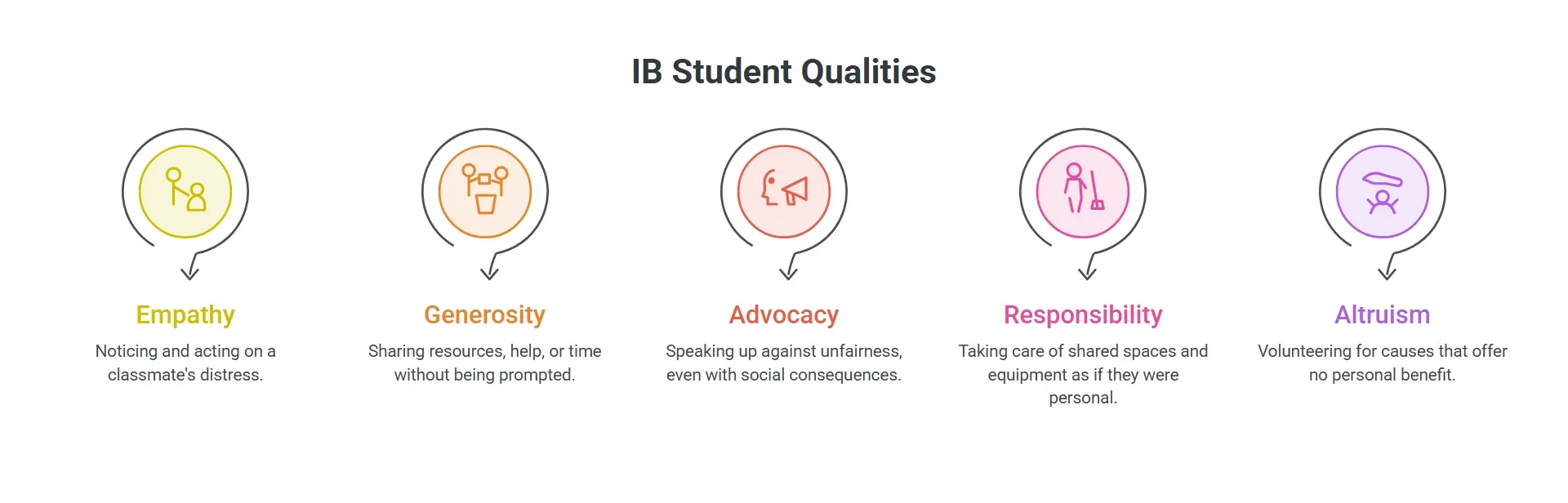
- They notice when a classmate is upset and act on it.
- They share resources, help, or time without being asked.
- They speak up when they see unfairness, even at social cost.
- They take care of shared spaces and equipment as their own.
- They volunteer for causes they cannot personally benefit from.
How HUS Chennai Develops the Caring Attribute
At Hiranandani Upscale School, caring is built into the timetable, not bolted on as an extra. Buddy systems pair older and younger students. Weekly service slots run from PYP onwards. CAS projects in the diploma years connect students with NGOs, environmental groups, and community partners across Chennai. Each student keeps a service portfolio that travels with them year on year.
Parents tell us that within months their child starts showing more attention at home, asking about grandparents, helping siblings without being told, donating clothes voluntarily. That shift is the caring attribute settling in.
Also Read: Developing leadership qualities early in students.
Conclusion
The ib learner profile caring attribute is not optional gloss. It is the trait that turns clever students into useful adults, and academic schools into genuine learning communities. At HUS Chennai, caring runs through every classroom, every project, and every student journey from age three to age eighteen.
References
FAQ's
Caring IB students show empathy, compassion, and respect. They commit to service and take action to improve the lives of others and the world around them.
Through buddy systems, service learning, CAS projects, classroom routines, and teacher modelling. Caring is treated as a daily practice, not a one-off lesson.
CAS is formally tracked in the IB Diploma. Students must complete and reflect on creativity, activity and service hours to earn the diploma, making caring measurable across two years.
Notice and name caring acts when your child shows them. Involve them in small acts of family service. Avoid rewarding kindness with gifts so it stays intrinsic.
From the IB Early Years Programme onwards. Even children aged three can learn to share, help, and notice others when guided gently by teachers and parents.
Universities and employers actively look for service experience, empathy, and teamwork. Caring graduates build stronger relationships, lead better teams, and adapt faster to diverse environments.