What Does It Mean to Be Principled in the IB?

June 28, 2026
Table of Contents
Honesty is easy when no one is watching. Or is it? Principled, the fifth attribute of the IB Learner Profile, argues the opposite. Real character shows when there is no audience, no reward, and no consequence in sight. This blog explains what being principled means in the International Baccalaureate framework, how the trait shows up at every grade, and why HUS Chennai places it at the core of everyday school life.
What the IB Means by Principled
The IB definition is precise. Principled students act with integrity and honesty. They have a strong sense of fairness and justice. They show respect for the dignity and rights of people everywhere. They take responsibility for their actions and accept the consequences.
Three words sit at the centre of this attribute: integrity, fairness, and responsibility. A principled student does not cheat on a maths test. A principled student also speaks up when a classmate is bullied, returns a lost wallet, and admits a mistake even when nobody noticed.
Why the Principled Attribute Matters in IB Education
Strong academic results without integrity create graduates who cut corners and break trust. The IB built the principled trait into the learner profile because the world has enough clever people and not enough honest ones.
In an era of AI-generated essays, plagiarised projects, and shortcut culture, being principled has become a serious differentiator. Universities increasingly look for evidence of academic honesty. Employers want hires who own mistakes rather than hide them. The ib learner profile principled trait builds these reflexes early, before they are tested under pressure.
How the Principled Attribute Looks at Each IB Stage
In the Primary Years (PYP)
At this stage, principled behaviour means simple but powerful habits: returning borrowed pencils, telling the truth about who broke something, sharing fairly. PYP teachers in our Primary Years Programme model these every day, not just during "values lessons".
In the Middle Years (MYP)
Now ethical reasoning kicks in. MYP students debate fairness, study how laws shape societies, and confront real moral dilemmas in literature, history, and science. Our Middle Years Programme builds referenced essays where citing sources is non-negotiable. Students start to see that being principled often costs something.
In the Diploma (DP)
This is where the rubber meets the road. Diploma students sign academic honesty agreements. They cite every source in their Extended Essay. They reflect on ethical implications in TOK lessons. In our Diploma Programme, being principled is not a poster on the wall. It is the difference between earning the diploma and losing it.
Six Real-Life Ways IB Students Show They Are Principled
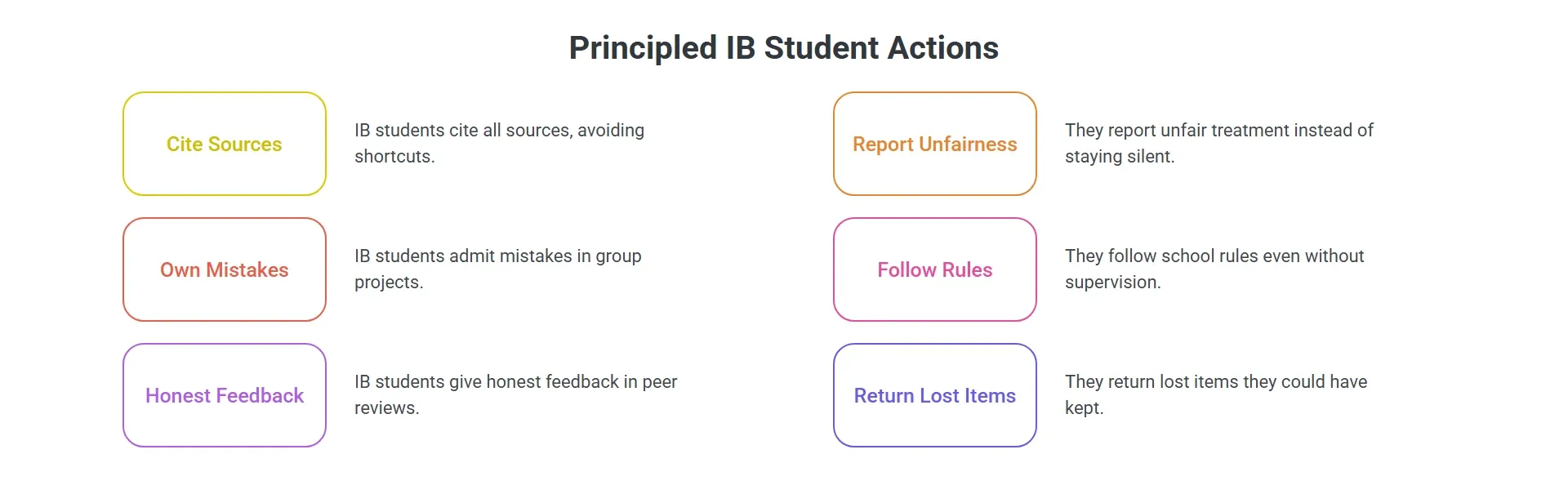
- They cite every source in essays, even when shortcuts are tempting.
- They report unfair treatment of classmates instead of staying silent.
- They own up to mistakes in group projects rather than blaming peers.
- They follow school rules even when teachers are not in the room.
- They give honest feedback in peer reviews instead of polite praise.
- They return lost items they could easily have kept.
How HUS Chennai Builds Principled Students
At Hiranandani Upscale School, the principled trait is built into daily routines, not delivered through occasional assemblies. Honour codes start in the PYP. Academic honesty workshops run every term in the diploma years. Restorative conversations replace blame and punishment when something goes wrong. Students learn that principles only matter when they cost something.
Parents at one of the leading international baccalaureate schools in Chennai often tell us their child started insisting on fairness at home, calling out double standards, or admitting hidden mistakes. That is the principled attribute moving from school into life.
Also Read: Step-by-step guide to earning your IB Diploma.
Conclusion
Being principled in the IB is not a slogan. It is a daily practice of integrity, fairness, and responsibility that compounds across years. The ib learner profile principled attribute prepares students for university, work, and adult life in ways that exam scores alone never can. At HUS Chennai, we treat it as foundational, not optional.
References
FAQ's
Principled IB students act with honesty, integrity, fairness, and respect. They take responsibility for their actions and the consequences that follow them.
Through honour codes, academic honesty policies, ethical discussions, and reflective tasks. Teachers model the behaviour and students apply it in projects, group work, and assessments.
The Diploma requires citation, original work, and reflection on ethical issues. Students who lack the principled mindset risk losing marks or even forfeiting the diploma over plagiarism.
Be consistent. Hold yourself to the same rules you set for your child. Praise honesty even when it brings bad news. Talk about real ethical dilemmas around the dinner table.
Not directly through grades, but academic honesty is enforced. Plagiarism, malpractice, or cheating can result in lost diploma points or disqualification from the qualification.
Politeness is surface behaviour. Principled is internal commitment. A polite child obeys rules because adults say so. A principled child upholds them when nobody is watching, because they believe in them.