IB Learner Profile: What Does It Mean to Be a Thinker?

May 26, 2026
Table of contents
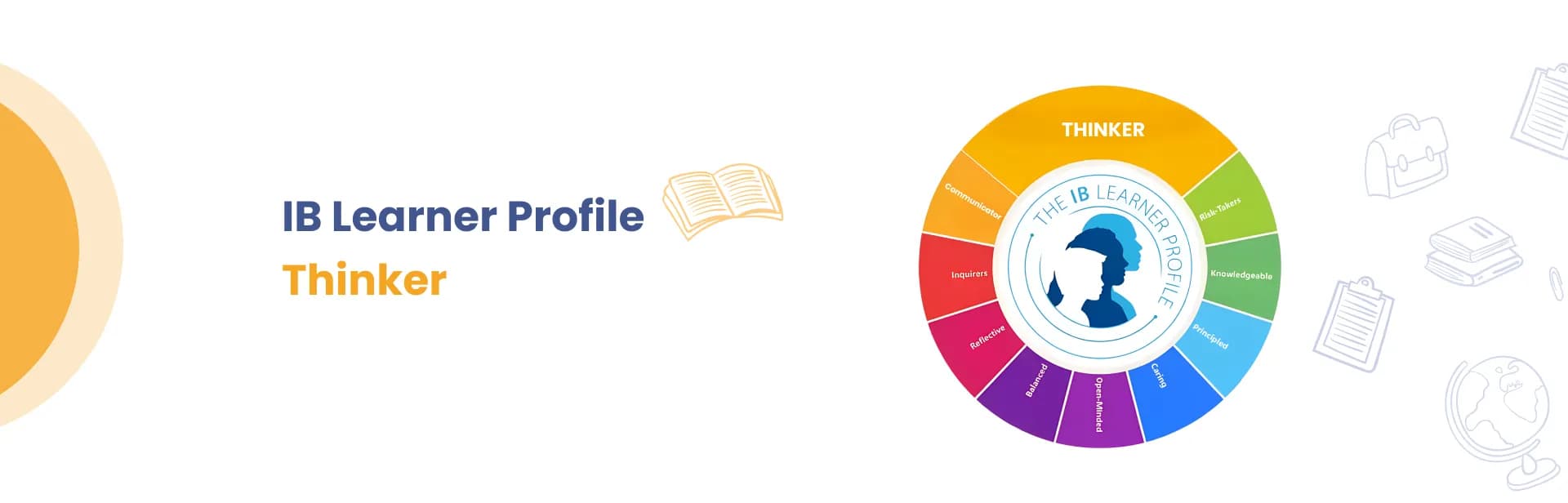
Walk into an IB classroom at HUS in Chennai during a unit of inquiry, and you will hear something different. Students do not just want the answer. They want to know why the answer is the answer, and whether there might be another one worth considering. That habit is exactly what the IB learner profile thinker attribute is built to develop. Among the ten attributes of the IB learner profile, being a thinker is the one that quietly powers the others, from inquiry to reflection to principled action.
This guide explains what the IB Learner Profile Thinker really means, how it is built across the PYP, MYP and Diploma Programme, and what parents in Chennai can do at home to help their child grow into a real thinker. The language is simple. The examples are practical. The focus stays on what shapes a child.
What Does the IB Learner Profile Thinker Attribute Mean?
The International Baccalaureate defines a thinker as a student who uses critical and creative thinking skills to analyse complex problems and take reasoned, ethical decisions. That short definition carries weight. A thinker is not simply a student who scores well on logic tests. A thinker is a child who pauses before reacting, weighs evidence, considers perspectives that are not her own, and then acts with judgment.
This is one of the ten learner profiles in IB, and it sits at the centre of how every IB classroom is designed. At HUS, we see this in students who treat questions as starting points rather than threats. A Grade 5 child studying water scarcity does not just memorise causes. She asks who is most affected, whether her data is recent, and what a solution would cost her own community in Chennai. That is the thinker ib learner profile in practice.
The 4 Essential Thinking Skills the IB Learner Profile Thinker Develops
Strong thinkers blend four distinct types of thinking. The IB programme is built to grow all four, and you will see them named in classroom learning targets at HUS from Grade 1 onwards.
| Thinking Skill | What It Looks Like | Classroom Example at HUS |
|---|---|---|
| Analytical Thinking | Breaking down a problem into smaller parts using logic and existing knowledge | Solving a maths word problem step by step in PYP Grade 4 |
| Divergent Thinking | Generating many possible answers when no single answer is right | Listing five solutions to reduce plastic in the school canteen |
| Critical Thinking | Examining evidence, questioning sources, and judging which argument is stronger | Comparing two news reports on the same Chennai weather event in MYP |
| Creative Thinking | Producing original ideas and seeing connections others miss | Designing a new wetland model in DP Environmental Systems |
How the IB Builds the Thinker Attribute Across PYP, MYP and DP
The thinker trait is not taught in one lesson. It has been built brick by brick over the years. Here is how the attribute develops as a child moves through the IB continuum at HUS.
The Thinker Attribute in the PYP (Ages 6 to 10)
Young learners in the IB Primary Years Programme build thinking through inquiry-led units. A teacher might pose an open-ended question, then let the class plan the investigation. The goal is not a tidy answer. It is teaching a child that good questions are a tool.
- Teachers ask, "What do you think?" before asking, "What is the answer?"
- Students record their predictions, test them, and reflect on what surprised them.
- Mistakes are reframed as evidence, not failure. A growth mindset becomes the norm.
The Thinker Attribute in the MYP (Ages 11 to 16)
In the Middle Years Programme, thinking becomes more structured. Students learn the Approaches to Learning (ATL) skills, where thinking is one of five core categories. They practise creative thinking through design projects and critical thinking through interdisciplinary units.
- Personal Projects in Year 5 demand independent reasoning.
- Service-as-action work makes students weigh real ethical trade-offs.
- Subject groups like Individuals and Societies push them to compare conflicting sources.
The Thinker Attribute in the DP (Ages 16 to 19)
The Diploma Programme sharpens the thinker into a researcher. Through the Extended Essay, students drive a 4,000-word independent investigation. Through Theory of Knowledge, they study the nature of knowledge itself. By the time DP students sit their final papers, they are reasoning at a level that universities recognise as first-year ready.
Real-Life Examples of the Thinker IB Learner Profile in Action
Definitions are useful. Examples are sharper. Here is what the thinker IB learner profile looks like at school across the ages.
| Age Group | What an IB Thinker Does |
|---|---|
| Early Years (1.6 to 5.6) | Asks "why" repeatedly, sorts objects in new ways, and predicts what happens next in a story. |
| Primary (6 to 10) | Plans a small experiment, compares two answers to the same question, and explains how she reached her conclusion. |
| Middle Years (11 to 15) | Identifies bias in a news source, builds an original argument in an essay, and weighs more than one solution to a design brief. |
| Diploma (16 to 17) | Defends a thesis with evidence, evaluates competing theories, and reflects on the limits of his own reasoning. |
Why Being a Thinker Matters Beyond the Classroom
Memorised facts have a short shelf life. The thinker attribute has a long one. Employers, universities and communities increasingly need young people who can reason through ambiguity, not just recall information. The OECD has highlighted critical thinking as one of the most in-demand skills of the next decade, and the IB designed the thinker attribute precisely to meet that need.
Students who internalise this trait carry it everywhere. They make better choices about money, relationships and careers. They are harder to mislead. They are also more curious, which tends to make life more interesting.
How Parents in Chennai Can Nurture the Thinker Attribute at Home
School does the structured work, but the habit takes root at home. A few simple shifts in everyday conversation make a real difference.
- Ask, "What do you think?" before offering your own opinion. Sit with their answer, even if it is not quite right.
- Treat questions as gifts. When your child asks why something works the way it does, look it up together rather than brushing it off.
- Let them argue, respectfully. Family discussions about real choices, like a weekend plan or a tricky news headline, build reasoning muscles.
- Model thinking out loud. When you make a decision, narrate the reasoning. Children copy this without realising.
- Praise the process, not just the result. Comment on how they figured something out, not only whether they got it right.
How the Thinker Connects with Other IB Learner Profile Attributes
No attribute lives in isolation. The thinker pairs naturally with several other attributes of ib learner profile.
- Inquirer feeds the thinker with good questions to chew on.
- Open-minded keeps a thinker from collapsing into a single viewpoint.
- Principled ensures the thinking leads to ethical action, not just clever ideas.
- Reflective allows the thinker to learn from past reasoning and improve next time.
This integration is what makes the IB learner profile more than a checklist. The ten attributes operate as a system.
How HUS Develops the IB Learner Profile Thinker in Every Student
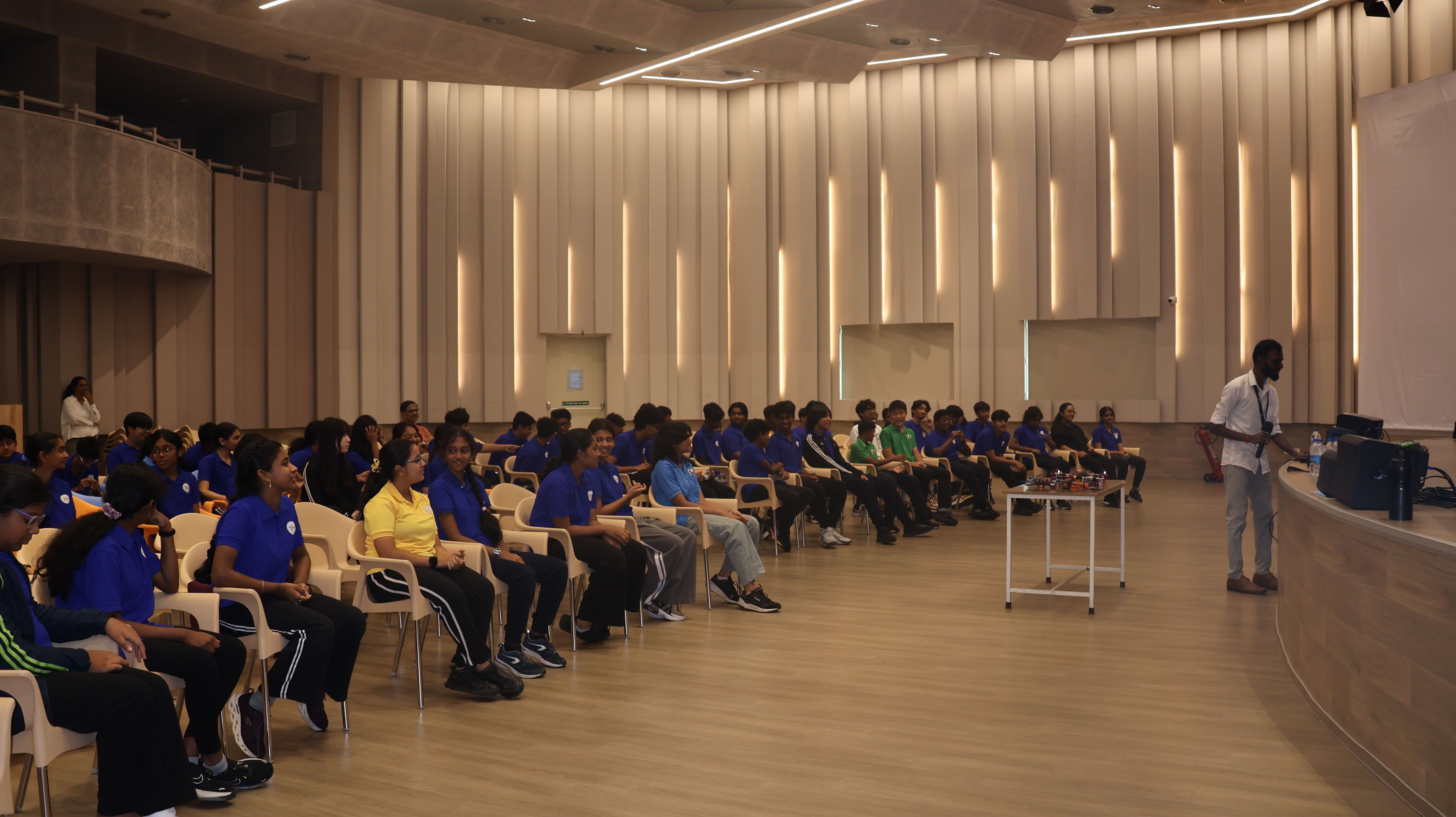
At Hiranandani Upscale School in OMR, Chennai, our classrooms are built around the idea that students learn to think by doing, not by being told. Across our full IB continuum, from EYP through to the IB Diploma Programme, you will see:
- Inquiry units that begin with student questions, not teacher lectures.
- Teachers trained as facilitators of inquiry push students to explain their reasoning aloud.
- Assessment that values how a student arrived at an answer, not only the final mark.
- TOK discussions in DP challenge students to question the source of every claim they encounter.
The result is a graduate who walks into university already comfortable with hard questions and unfinished answers.
Also Read: How IB Education Prepares Students for Life Beyond School
Conclusion
Being a thinker, in the IB sense, is not about being the smartest child in the room. It is about being the most thoughtful one. The student who pauses, weighs, reasons and decides. That habit, built patiently across years of IB schooling at HUS, is one of the most useful things a young person can carry into adult life.
If you want to see how the thinker attribute takes shape alongside the other nine traits, our pillar guide on the IB learner profile offers a closer look at every attribute that supports it.
References
FAQ's
The IB learner profile thinker is an attribute that describes a student who uses critical and creative thinking skills to analyse complex problems and reach reasoned, ethical decisions. It is one of the ten IB learner profile attributes and shapes how IB students approach questions throughout school and life.
IB schools build the thinker attribute through inquiry-based learning in the PYP, structured Approaches to Learning thinking skills in the MYP, and reasoning-heavy work in DP courses like Theory of Knowledge and the Extended Essay. Teachers ask students to explain how they reached an answer, not just what the answer is.
A Grade 4 student designing his own science experiment, a Grade 9 student spotting bias in two news reports, and a Grade 12 student writing an Extended Essay that challenges a textbook theory are all examples of the IB learner profile thinker in action. The trait shows in how students reason, not just what they know.
Parents can build the thinker attribute by asking open-ended questions, modelling decision-making out loud, allowing respectful disagreement at home, and praising the process of reasoning rather than only correct answers. Simple daily habits matter more than dedicated thinking lessons.
Universities and employers consistently rank critical thinking among the top skills they need. IB students who have developed the thinker attribute enter higher education already practised at evaluating evidence, weighing perspectives, and forming defensible arguments, which gives them a measurable advantage.