IB Learner Profile: What Does It Mean to Be a Communicator?

June 23, 2026
Table of Contents
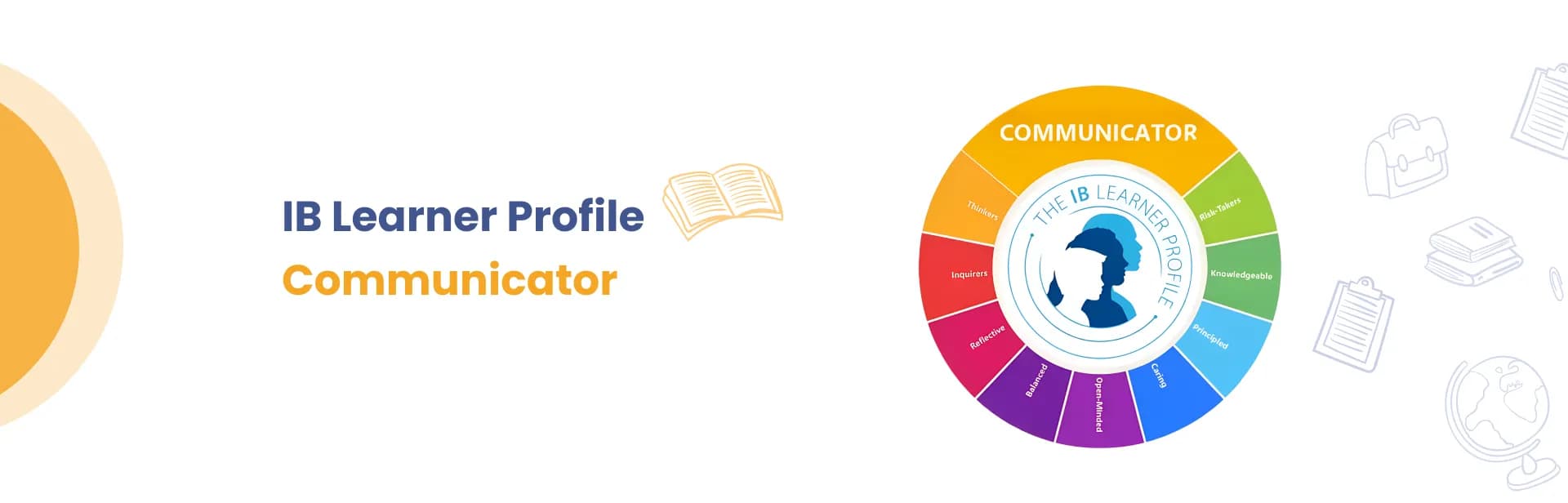
Step into any IB classroom at HUS in Chennai around midday, and you will hear something traditional schools rarely do: students explaining their thinking, listening carefully to a classmate, asking follow-up questions, and occasionally disagreeing with respect. That kind of exchange is not a happy accident. It is built deliberately, lesson after lesson, year after year. The IB calls this the IB learner profile communicator attribute, and it is one of the most quietly powerful attributes of the IB learner profile.
This guide explains what the IB Learner Profile Communicator really means, how it shows up across the PYP, MYP and DP, and what parents and teachers can do to nurture it. The focus stays practical, not abstract.
What Does the IB Learner Profile Communicator Attribute Mean?
The IB defines a communicator as a student who expresses ideas and information confidently and creatively in more than one language and in many ways. They collaborate effectively, listening carefully to the perspectives of other individuals and groups.
Two parts of that definition do most of the work. The first is the breadth: speaking, writing, drawing, presenting, designing, and performing. The second, often missed, is listening. A strong IB communicator is not just someone who talks well. It is someone who hears others, builds on their ideas, and adjusts her own thinking in response.
The 4 Dimensions of the IB Learner Profile Communicator
Communication looks different at different ages and in different subjects, but it always rests on four habits. The IB programme is designed to grow all four at HUS.
| Dimension | What It Looks Like | Where Students Practise It |
|---|---|---|
| Expression | Sharing ideas clearly in speech, writing or visual form | Class discussions, written essays, and project presentations |
| Active Listening | Hearing what is actually said, asking clarifying questions, and reflecting back accurately | Socratic seminars, group inquiry, and peer feedback sessions |
| Collaboration | Working with others toward a shared goal, sharing time and credit fairly | Group projects, design tasks, service-as-action work |
| Multilingualism | Communicating effectively in more than one language | Language A and Language B subjects, mother-tongue programmes |
How the IB Builds the Communicator Attribute Across PYP, MYP and DP

The IB learner profile communicator is not built in one lesson. It is years of small, consistent practice. Here is how the skill develops as students move through the IB continuum at HUS.
The IB learner profile communicator is not built in one lesson. It is years of small, consistent practice. Here is how the skill develops as students move through the IB continuum at HUS.
The Communicator Attribute in the PYP (Ages 3 to 12)
In the Primary Years Programme, young learners start with the basics. Teachers explicitly name communication behaviours when they see them. Children share their work in morning circles, present mini-investigations to the class, and learn to disagree without raising their voice. Multilingual classrooms add depth: many HUS PYP students communicate in two or three languages by the end of Grade 5.
- Daily "think, pair, share" routines build listening habits.
- Storytelling and drama sessions develop expressive confidence.
- Language B starts early, often from Grade 1 or 2, alongside the mother tongue.
Also Read- Guide to the IB Primary Years Programme (PYP)
The Communicator Attribute in the MYP (Ages 11 to 16)
The Middle Years Programme raises the stakes. Communication becomes one of the five Approaches to Learning (ATL) skill categories, with measurable indicators. Students present research, defend interpretations and collaborate on interdisciplinary units. Language acquisition continues across both Language A and Language B.
- Personal Projects in Year 5 culminate in a public presentation.
- Service-as-action requires students to communicate with the wider community.
- Subject-specific writing (lab reports, history essays, design briefs) sharpens written form.
Also Read- Guide to the Middle Years Programme
The Communicator Attribute in the DP (Ages 16 to 19)
The Diploma Programme refines communication into a university-grade skill. The IB Diploma Programme treats writing, oral presentation and active listening as graded outcomes, not extras. Through TOK exhibitions, Extended Essay vivas and language oral exams, students leave the IB able to defend an argument in front of a panel of subject experts.
Real IB Learner Profile Communicator Examples in the Classroom
Definitions are useful, but examples make the trait visible. Here is what the IB learner profile communicator looks like at each stage of school.
| Age Group | IB Communicator in Action |
|---|---|
| Early Years (3 to 5) | Greets teachers in Hindi, Tamil and English, retells a story using props, and takes turns speaking in circle time. |
| Primary (6 to 11) | Presents a class research project, asks clarifying questions in group work, writes and acts out a short play. |
| Middle Years (12 to 15) | Leads a Socratic seminar on a class novel, defends a scientific hypothesis using data, and runs an awareness campaign on a community issue. |
| Diploma (16 to 18) | Delivers a TOK exhibition, defends an Extended Essay topic to a supervisor, and conducts a language oral in a non-native tongue. |
Why the IB Communicator Trait Matters Beyond School
Strong communication shapes outcomes well past the school gate. University admissions interviewers, employers and community leaders consistently rank communication among the top three skills they look for. In a 2023 World Economic Forum survey, active listening and clear expression both ranked in the top ten skills employers expect to grow in demand by 2027.
More than the job market, communication shapes how a young person navigates life. The ability to express disagreement without hostility, to listen across difference, and to ask a useful question in a hard moment are skills that travel into every relationship and every career.
How Parents in Chennai Can Build Communicator Skills at Home
The school handles the structured work. Home is where the trait either takes root or stays surface-level. A few small shifts in daily routine make a real difference for IB families in Chennai.
- Eat at least one meal together each day, screen-free. Conversation needs unhurried time and undivided attention.
- Ask open-ended questions. "What was the most surprising thing today?" beats "How was school?" every single time.
- Let your child finish without interrupting. Modelling listening teaches it faster than instructing on it.
- Read aloud together, even after children can read independently. Conversation around a shared text is a goldmine.
- Praise specifically. "I liked how clearly you explained that" tells a child what worked. "Good job" tells them nothing useful.
- Keep a second language alive at home. Hindi, Tamil, Telugu or any heritage language alongside English builds the multilingualism the IB values. Bilingual children consistently show stronger expressive flexibility.
Also Read- IB School Admissions: A Step-by-Step Guide for Parents and Students
How the Communicator Connects with Other IB Learner Profile Attributes
The ten IB learner profile attributes work as a connected system. The communicator trait reinforces and is reinforced by several others.
- Open-minded shapes the listening half of communication: hearing perspectives, not just words.
- Caring softens the tone of disagreement, so an honest exchange does not become hurtful.
- Reflective lets a communicator notice what worked and what did not in a conversation.
- Thinker provides the substance behind the expression.
This is why the IB programme treats the attributes as a profile, not a list. They feed each other.
How HUS Develops the IB Learner Profile Communicator in Every Student
At Hiranandani Upscale School in OMR, Chennai, communication is built into the rhythm of every school day, not reserved for elocution competitions. Across the full IB continuum, students experience classrooms where teachers act as facilitators of inquiry, which means students do most of the talking, listening and explaining.
- A multilingual environment from the earliest years. Most HUS students speak two or more languages confidently by Grade 5.
- Regular public presentations, exhibitions and exhibitions of learning where parents and the wider community attend.
- Strong emphasis on Socratic seminars and structured discussion protocols across the MYP.
- Co-curricular programmes that build leadership and public speaking: Model UN, debate clubs, and performing arts.
Also Read: How IB Education Prepares Students for Life Beyond School
Conclusion
Being a communicator, in the IB sense, is not about being the loudest voice in the room. It is about being the clearest, the most honest, and the most attentive one. The ib learner profile communicator is a student who can express an idea well, listen well, and adjust well. It is a student who can lead, collaborate and contribute anywhere life takes her.
If you want to see how the communicator trait fits with the rest of the framework, our pillar guide on the IB Learner Profile Series at HUS goes attribute by attribute through what each one looks like in practice.
References
FAQ's
The IB learner profile communicator is a student who expresses ideas and information confidently in more than one language and through many forms of expression, while listening carefully to the perspectives of others. Both expression and active listening matter equally in the attribute.
Examples include a Grade 3 student retelling a story with props, a Grade 7 student leading a Socratic seminar on a novel, a Grade 10 student running a community awareness campaign, and a Grade 12 student defending an Extended Essay to a supervisor. Each is the IB learner profile communicator visible at an age-appropriate level.
The IB builds the communicator attribute progressively. PYP focuses on confidence and listening through daily routines and language exposure. MYP formalises communication as one of the Approaches to Learning skill categories. DP refines it into university-grade writing, oral presentation and multilingual fluency through assessed outcomes like TOK presentations and language orals.
Yes. Daily screen-free conversation, open-ended questions, modelling active listening, reading aloud together, and encouraging a second or third language at home all build the IB learner profile communicator attribute. Small, consistent habits matter more than dedicated communication classes.
Universities and employers consistently rank communication among the top three skills they need. The trait also shapes personal relationships, leadership and the ability to contribute in community settings. Few skills travel as widely as clear, respectful, multilingual communication.